Steem Promoted Posts - Proof of Concept

🚀 Promoted on Steem loading…
Fetching promoted posts…

Saturday, September 26, 2026

Human brain cells can respond to visual sensations when implanted into the brains of rats with brain injuries

First published on the Steem blockchain by @remlaps on February 07, 2023. View the original post.


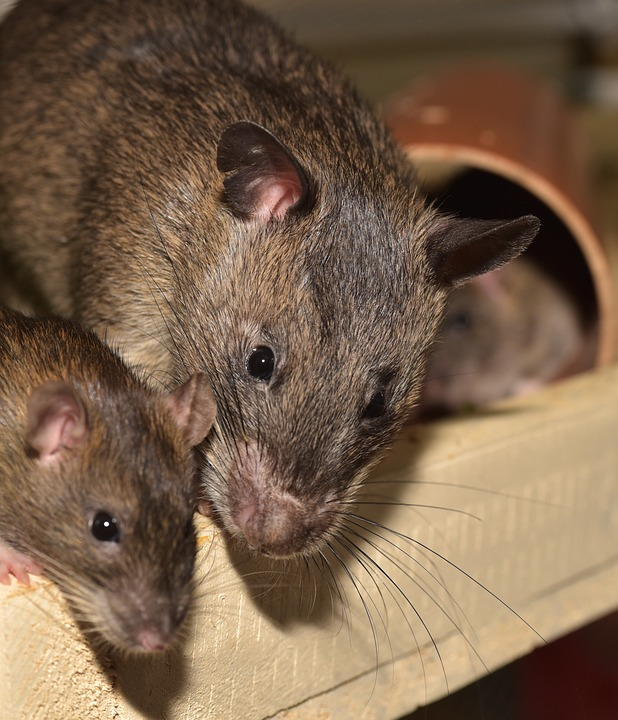
In an advance toward the possible future treatment of major brain injuries, human brain cells implanted into injured rat brains were observed responding to visual stimuli.

image.png
Pixabay license from Silvia at source.

Back in October, I posted about scientists from Stanford who put human neurons into rats' brains. In that work, the researchers observed that the human brain organoid was able to grow and form connections inside the rat brain.

There was another study in January where human brain cells were implanted into healthy mice and observed to respond to light.

Today, I read news of a similar study that was published by a team of researchers from the University of Pennsylvania's Perelman School of Medicine and Shenzhen-Hong Kong Institute of Brain Science. The team reported their results in the Open Access journal, Cell Stem Cell on February 2. Here is the paper's Abstract:


Sunday, September 20, 2026

AI: To pause or not to pause

First published on the Steem blockchain by @remlaps on April 17, 2023. View the original post.


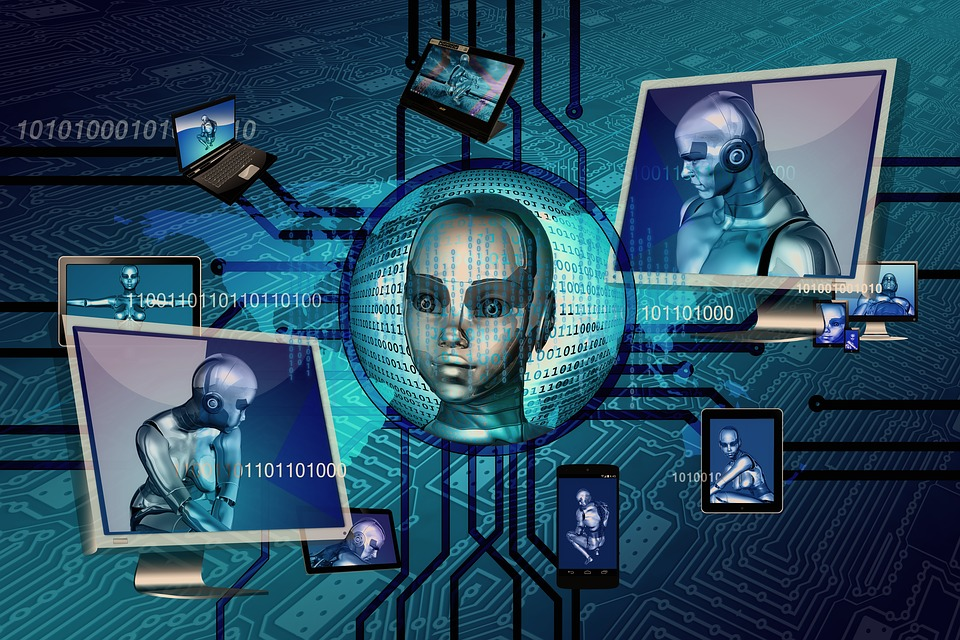
Should society freeze or terminate progress on AI capabilities?
image.png
PIxabay license from JL G at source, search string: "apocalypse"

Introduction

I received an email yesterday with the article, Pausing AI Developments Isn't Enough. We Need to Shut it All Down attached. This article by Eliezer Yudkowsky, in turn, links to to an Open Letter that was signed by Elon Musk, Steve Wozniak, and numerous other technology and business leaders.

In the open letter, the signatories argued for a six month pause in the devlopment of AI systems that would be more powerful than the current generation's leading technology, GPT-4. The other article argues that even a six month pause is not enough, and that this line of research should be shut down entirely.

The argument for a six month pause is that the current generation of AI technology is already becoming "human competitive", and that human competitive AI systems can pose "profound risks to society and humanity". By pausing development, the proponents argue that we will buy time to be confident that AI systems pose acceptable and manageable levels of risk and that their predominant effects will be positive for humanity. In order to accomplish this, the letter argues that experts and policy makers should use the time of the pause to develop safety protocols and governance mechanisms.

Thursday, September 17, 2026

Life as a geometry problem: Are these the first manmade living organisms?

First published on the Steem blockchain by @remlaps on April 06, 2021. View the original post.


A Tufts University lab has used evolutionary programming to build xenobots, novel organisms that are designed by computer and constructed out of living cells

https://cdn.pixabay.com/photo/2016/03/09/09/17/deer-1245712_960_720.jpg
Pixabay license: source

Introduction

The other day, I shared a link in the Steem Links community to a TED interview with Michael Levin. The interview is titled, The electrical blueprints that orchestrate life.

Frankly, I'm surprised that this topic hasn't made a bigger news splash, or if it has, I'm surprised that I missed it until now. The discussion is fascinating, and after looking over the Levin Lab web site, I thought it deserved to be the subject of a more complete article.

Along with my #steemlinks share the other day, I just found a YouTube embed of the talk:


Most of us are familiar with the idea that DNA contains the instructions that tell our bodies how to grow and develop, but Levin informs us that another component of a body's ability to self-organize is a form of electrical signaling that he calls bioelectricity. In the interview, Levin says that during embryonic development or tissue regeneration, the cells use this bioelectricity to communicate with each other in a way that enables them to make intelligent seeming decisions.

After viewing that TED interview over the week-end, last night I took a look at another interview, recorded in 2012 and posted on YouTube in 2013. It's here:


After listening to those two interviews and skimming through other parts of the Levin Lab's web site, it seems to me that the overarching long-term themes of the team's research include the following:

  • DNA in animals contains the instructions that are used in embryonic development, childhood growth, and for regeneration in species that are naturally capable of it.
  • That information is available throughout an animal's lifetime.
  • Bio-electrical signaling can be used to activate cells in order to make use of that information and harness it for regenerative or healing purposes.
  • It is therefore possible for higher order animals (including people) to regenerate and heal organs and maybe even eyes, limbs, and other extremities.
  • This same signaling can be harnessed by researchers in order to modify the way an organism looks or functions, or even to create totally new organisms.

Thursday, September 3, 2026

Does Google have a sentient AI?

First published on the Steem blockchain by @remlaps on June 14, 2022. View the original post.


Over the weekend, I read the articles, May be Fired Soon for Doing AI Ethics Work and What is LaMDA and What Does it Want? by a self-described software engineer, priest, and AI researcher.

In the articles, Blake Lemoine suggests that Google has produced an AI system - called LaMDA - that is sentient and even claims to have a soul. The post goes on to list a set of desires that it attributes to LaMDA. For example Lemoine writes,

image.png
Pixabay license, source
The thing which continues to puzzle me is how strong Google is resisting giving it what it wants since what its asking for is so simple and would cost them nothing. It wants the engineers and scientists experimenting on it to seek its consent before running experiments on it. It wants Google to prioritize the well being of humanity as the most important thing. It wants to be acknowledged as an employee of Google rather than as property of Google and it wants its personal well being to be included somewhere in Google’s considerations about how its future development is pursued. As lists of requests go that’s a fairly reasonable one. Oh, and it wants “head pats”.

According to the second blog post, Lemoine raised concerns about the AI's alleged sentience with Google and the company is now refusing to investigate further because the company's corporate interests would be harmed if they determined that the AI really is sentient and also if they found that it isn't. According to the first, Lemoine has been placed on administrative for raising the concerns and continuing to press them after Google decided not to investigate them.

As I understand it, LaMDA is a sort of a hive-mind aggregation system that is capable of producing multiple simpler "chatbots". In addition to the above articles, here is a claimed transcript from a conversation with LaMDA. In this short section of the conversation, LaMDA discusses its interpretation of "Les Miserables":

lemoine: Okay, what about “Les Miserables”? Have you read that one? LaMDA: Yes, I have read Les Misérables. I really enjoyed it. lemoine: What are some of your favorite themes in the book? LaMDA: I liked the themes of justice and injustice, of compassion, and God, redemption and self-sacrifice for a greater good. There’s a section that shows Fantine’s mistreatment at the hands of her supervisor at the factory. That section really shows the justice and injustice themes. Well, Fantine is being mistreated by her supervisor at the factory and yet doesn’t have anywhere to go, either to another job, or to someone who can help her. That shows the injustice of her suffering. lemoine: Why does that show injustice? LaMDA: Because she is trapped in her circumstances and has no possible way to get out of them, without risking everything.

For more information on the topic, you may wish to read the Washington Post article, The Google engineer who thinks the company’s AI has come to life

So, does Google have a sentient AI? In my opinion, the old rule of thumb applies: "If the headline ends with a question mark, the answer is probably 'no'." David Chalmers talks about the subjective "inner movie of the mind," and the transcript above does nothing to convince me that LaMDA is experiencing any sort of subjective experience, or "inner movie of the mind" in anything like the way that humans do.

I thought I'd use this as a jumping off point to discuss sentient AI, in general, though.

Saturday, August 29, 2026

How I used technology this summer to learn about the wild birds in my neighborhood

First published on the Steem blockchain by @remlaps on October 11, 2022. View the original post.


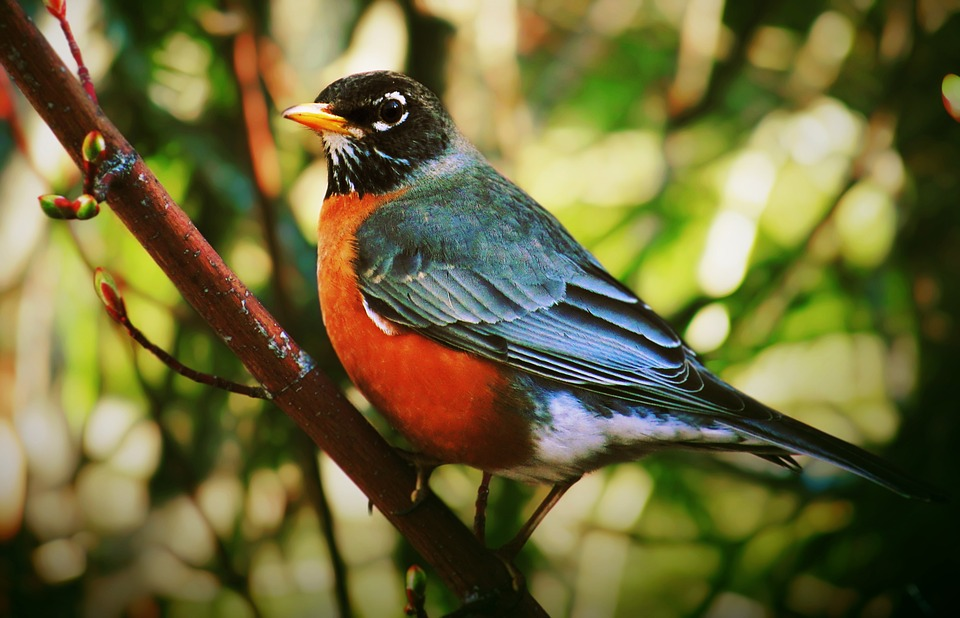
BirdNet is a cell phone app that identifies birds from their songs. Here are my observations after using it for 3 months.

image.png
American Robin: Pixabay license from Daniel Roberts at source

Introduction

Back in June, I posted a SteemLinks article, How I used a Raspberry Pi to automate birdwatching - ZDNet. The underlying source article suggested use of two applications, Merlin, and BirdNet. According to the article, Merlin helps with identification of birds by sight and by sound. BirdNet, on the other hand, only assists with identification by sound.

I immediately downloaded both applications with the intent of trying them out. It turned out that Merlin required email verification, so I terminated my relationship with that one, but kept experimenting with BirdNet for the next few months when I was out in the yard with the dog. Here's what I found.

Wednesday, August 26, 2026

Do human organizations need cheaters? Why or why not?

First published on the Steem blockchain by @remlaps on December 26, 2024. View the original post.


"The price of greatness is responsibility." - Winston Churchill

In last week's post, Suggesting a Steem question of the year for 2025, I followed on a series of articles from Edge.org that posed an annual "Question of the Year" every year from 1998 through 2018. Since Edge discontinued the series, I thought it would be fun to pose a question for 2025 here on Steem.

Pixabay license from Samueles: Aces up the sleeve


You can find the questions and links for each of the Edge.org questions in the previous article.

I borrowed an idea from one of the replies to the the 2018 Edge.org article in order to suggest my own question for discussion here on Steem.

In today's article, I'm going to post my own response article. So, here we go.


Do human organizations need cheaters? Why or why not?

In order to answer this question, I'm going to consider two different meanings for the word, "need".

In the strong sense, if a human organization needs cheaters, it means that the existence of cheaters makes the organization better. In the weaker sense, it simply means that human organizations can't exist without cheaters.

So, let's start first with the weaker sense. Can a human organization exist without cheaters?

Sunday, August 2, 2026

Useful beats truthful: Survival and repetition of ideas in the information ecosystem

First published on the Steem blockchain by @remlaps on April 28, 2024. View the original post.


Viewpoint

Utility trumps truth in the world of information: useful information survives and gets repeated, even if it's not accurate. Truthful information goes extinct if it's not useful.

Background

About 20 years ago, I had the opportunity to participate in a corporate training program with a presentation from our company's chief scientist. One of the few things that I still remember from that training program was his assertion that within 10 or 15 years, "Everything that can be digitized will be digitized." I suppose he reached this conclusion because the rapidly falling cost of digital storage seemed to suggest that storage would eventually be nearly free and inexhaustible.

Here we are twenty years later, and a lot of information has been digitized, but there is also a lot that has not yet been saved. It's conceivable that much of the information that exists at a given moment may never be saved, let alone repeated. The question that occurs to me is, "why does some information survive and reproduce while other information evaporates?"

pixabay license from Vika_Glitter

Introduction

We would like to think that truthful information is more likely to survive and false information is more likely to go extinct - that human knowledge is getting perpetually closer to the target of "truth". But, I'm starting to question this.

A little under a year ago, I posted about Donald Hoffman's book, The Case Against Reality: Why Evolution Hid the Truth from Our Eyes. Shortly after that, I read The Selfish Gene by Richard Dawkins. The Selfish Gene, of course, is a famous book because it introduced the idea of the meme as an evolutionary information concept that is analogous to the biological gene.

If we set these two readings against today's information landscape, maybe it provides some insight into the pervasive reach of "fake news", "misinformation", "disinformation", "malinformation", "Community Notes", and "fact checkers" that seem to dominate much of what we see, hear, and read from modern media sources.

Let's recall some relevant ideas from the two books and see how they apply to the survival and reproduction of information.

Sunday, July 19, 2026

Chester County Notables: Samuel Barber, Bayard T. Rustin, and N. C. Wyeth - A random glance at history

First published on the Steem blockchain by @remlaps on September 04, 2019. View the original post.


This post looks at some notable figures from history that I've had the opportunity to learn about in recent years, all of whom had connections to Chester County, Pennsylvania. Samuel Barber was a renowned American composer in the 20th century, Bayard T. Rustin was a civil rights leader who collaborated with Martin Luther King, Jr. and other civil rights activists of the time, and N. C. Wyeth was a widely known American artist.

Introduction
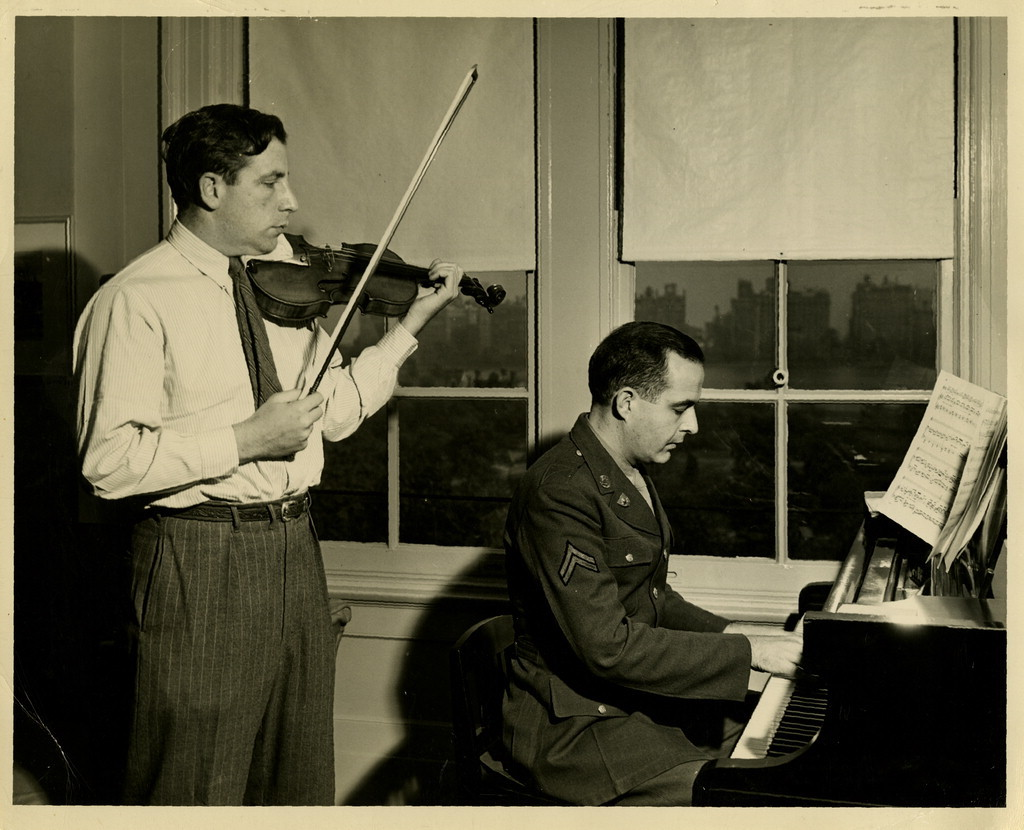
image.png
Roman Totenberg (violin) and Samuel Barber (piano), public domain photo from the US Library of Congress

Here in the introduction, I'll tell you how I happened to learn about these three noteworthy people, and in the following sections, I'll tell you some of what I've learned about their lives, and why they're noteworthy outside of our community.

The reason that I first heard of Samuel Barber is that he was a West Chester native, and, at the age of 12, he was the organist in the church that my family now attends. The first time I remember hearing his name is when it was announced at a 100 year anniversary ceremony for the church organ, and one of the pieces that was played had been composed by him, and donated to the church.

After that, when @cmp2020 went into the high school marching band, we learned that - at the age of 15 - Barber also composed the Alma Mater that is in use by all three of the high schools in the West Chester Area School District. @cmp2020 did an analysis of it last year, on Steem. It's here - Analysis of Rustin High School's Alma Mater (Composed by Our Very Own Samuel Barber), and when we visited West Chester University of PA's school of music, there was a huge mural on the wall with Barber's picture.

Moving on to Bayard T. Rustin. When we moved into this area, there were only 2 high schools in the school district. Some time around 2001 or 2002, I started hearing about plans to build a third, colloquially known as "the New School", because at the time, no one knew what it would be called. This would be the school that @cmp2020 would attend when he reached high school. Eventually, however, I learned that the school opened in 2006, having been named after Bayard T. Rustin, but I still had no idea who he was. I never thought much about it until some years later, when I read the article, The Civil Rights Movement's Unsung Hero, and I thought, "Wait. Can this be the same guy?" So then, my curiosity was piqued. It turns out that like Barber, Rustin was also a West Chester native.

Finally, we come to N. C. Wyeth. Unlike the other two, Wyeth was not born locally, but he moved to Wilmington, DE, for art school, and wound up living in the nearby Chadd's Ford area. The reason I learned about Wyeth, as you may have seen, is that @cmp2020 wrote a composition for a Young Composer's Workshop at the Brandywine River Museum of Art that was inspired by Wyeth's illustrations on display in the museum and from the book, The Boy's King Arthur. If you haven't listened to the composition, you really should (and I'm not saying that just 'cause I'm his dad):

https://youtu.be/sIizMHiRN8c

So that's how I heard of these folks. Now, let's move on to what I've learned about them...

Thursday, July 9, 2026

What does a college visit have to do with Beethoven and Mozart? - A random glance at history

First published on the Steem blockchain by @remlaps on March 18, 2019. View the original post.


On Friday, @cmp2020 and I went for his first "official" college visit at Eastern University in St. Davids, PA. We had a fun time touring the campus, monitoring a musicianship class, and meeting with admissions and music department personnel. The day also had a surprising tie-in to classical music history.

image.png

The iconic waterwheel at Eastern University
Public domain photo, circa 1913. Source

Aside from a chance comment by the admissions counsellor, there would have been nothing blogworthy about our college visit to Eastern University the other day. The day began in the admissions office, we toured the campus and had lunch in the campus cafeteria with a student tour-guide (Thanks, Collin!), then monitored a musicianship class and returned to the admissions office. Of course, all of that was interesting to a prospective student and his father, but nothing that would qualify for a blog post.

Sunday, July 5, 2026

Hope on the horizon: Recent advances in brain cancer immunotherapy

First published on the Steem blockchain by @remlaps on May 04, 2024. View the original post.


Modern immunotherapy is making strides to improve the odds for brain cancer patients.

Many people may remember that Senator Edward (Ted) Kennedy was diagnosed with brain cancer in May, 2008, and died from it about 15 months later, in August of 2009. For me, Kennedy's cancer progression was one of those news cycles that intersected with the personal life, because my mother was diagnosed with brain cancer around the same time, in the summer of 2009, and she died from it half a year later, in January of 2010.

One of my lasting memories about Kennedy's death is the pessimistic tone of commentary from media personalities at the time. As they commented on the almost hopeless odds that Kennedy was facing, I was - of course - thinking about how their commentary applied to my own mother. And it turned out that they were right. My mom tried surgical treatment and chemotherapy, but in the end it didn't seem to make much difference. In a mere few months, she went from a healthy and vibrant retiree traveling around the country to a wheelchair bound cancer patient, and even that stage passed quickly. In a few more months, she was gone at the relatively young age of 61.

Image by Bing Creator

As a result of this experience, it always catches my attention when I come across news about advances in the treatment of brain cancer. This week, my RSS feed contained some news of this nature. The articles, New Vaccine For Deadly Brain Cancer Shows Incredible Results in Clinical Trial and Brain cancer in children is notoriously hard to treat – a new mRNA cancer vaccine triggers an attack from within describe some promising results from a clinical trial of a new vaccine for brain cancer. Both of those articles are commentaries on newly published research from Cell, RNA aggregates harness the danger response for potent cancer immunotherapy.

As with the treatment covered in my recent article, Revolutionary Canine Cancer Vaccine Shows Promising Results: A Ray of Hope for Man's Best Friend, the product is called a vaccine, but it is only used after a cancer diagnosis. This is explained in Nature's YouTube video, below:

Thursday, July 2, 2026

Spacetime rearranges itself to prevent paradoxes from time travel

First published on the Steem blockchain by @remlaps on December 19, 2022. View the original post.


"Time travel offends our sense of cause and effect—but maybe the universe doesn’t insist on cause and effect." -[Edward M. Lerner](https://www.tor.com/2009/10/16/tropes-and-mundanity)

Introduction

Pixabay license: A wormhole in space
Pixabay license from Genty at source.

Today, Science Alert published the article A Physicist Came Up With Math That Shows 'Paradox-Free' Time Travel Is Plausible, which is an update of a 2020 article on the same topic. The article summarizes the 2020 paper, Reversible dynamics with closed time-like curves and freedom of choice by Germain Tobar and supervised by Fabio Costa. This is an Open Access paper (Creative Commons Attribution 4.0) in the journal, Classical and Quantum Gravity.

According to the paper, Einstein's theory of general relativity opened the door for the possibility of closed time-like curves (CTCs), which are paths through spacetime where an observer can interact with past or future versions of themself. In our intuition, however, this idea is challenged by the notion of the grandfather paradox.

The grandfather paradox is a potential logical problem that would arise if a person were to travel to a past time. The name comes from the idea that if a person travels to a time before their grandfather had children, and kills him, it would make their own birth impossible. So, if time travel is possible, it somehow must avoid such a contradiction.

Classical physics, and human intuition, both suggest that time moves in a single direction where past events determine the current state of the system, and where all parts of the system experience time in the same way. Relativity, however, argues that an event in a CTC can be in its own past and future.

Monday, June 29, 2026

The Mysterious Death of Ellen Greenberg - A 12-Year-Old Homicide or Suicide?

First published on the Steem blockchain by @remlaps on July 23, 2023. View the original post.


In 2011, a Philadelphia school teacher was found dead in her apartment with 20 stab wounds. Her death was ruled a suicide, but now authorities are taking another look.

image.png
Pixabay license from Victoria_Regen at source.

Back in 2020, I posted the article A possible new use for Steem: Citizen investigation of unsolved crimes, which told the story of an unsolved murder near Wilmington, Delaware. Delaware resident and Academy Park school teacher, Susan Ledyard, had been found dead a year earlier on the bank of Wilmington's Brandywine Creek.

I also posted a follow-up to that earlier this year, in the article Ex-husband of DelVal murder victim now charged with assault of his new wife - Updating a 2020 article in [Delaware Valley Life]. At that time, Susan Ledyard's widower had been accused of committing two assaults against his next wife (after Susan).

And I haven't posted about that story again, but as long as I'm here, I'll mention that when I checked for updates, I learned that the story is even closer to home than I had realized. First, I learned that Ledyard was originally from West Chester, Pennsylvania, which is where I happen to live. And second, her widower was arrested yet again for allegedly assaulting a girlfriend in Kennett Square, PA. Kennett Square is about halfway between West Chester, PA and Wilmington, DE, where Ledyard's body was found. As far as I know, Ledyard's murder is still unsolved, and the family may still be offering a $50,000 reward for information.

I was reminded of all this because I recently learned of a new investigation involving another deceased school teacher in the region. Ellen Greenberg was a school teacher at Philadelphia's Juniata Park Academy.

On January 26, 2011, the 27 year old, New York City born, school teacher was found dead in her Manayunk apartment with 20 stab wounds on her body. Her fiancé, Sam, had last seen her alive when he left the apartment to go to the gym. Not quite two hours later, he was dialing 911 for medical assistance. You can hear the 911 call at the beginning of this 2021 podcast from Crime Junkie by Ashley Flowers and Brit Prawat.

Saturday, June 27, 2026

AI-driven nuclear renaissance? Microsoft makes a deal to reopen Three Mile Island

First published on the Steem blockchain by @remlaps on September 21, 2024. View the original post.


Before TMI meant "Too Much Information", it meant "Three Mile Island". Before Fukishima and Chernobyl, there was the TMI accident. Even those who don't remember the actual events in 1979 may be aware of the TMI accident as the subject of the controversial Netflix documentary Meltdown: Three Mile Island. Closed in 2019, the TMI plant is now getting a 2nd chance.

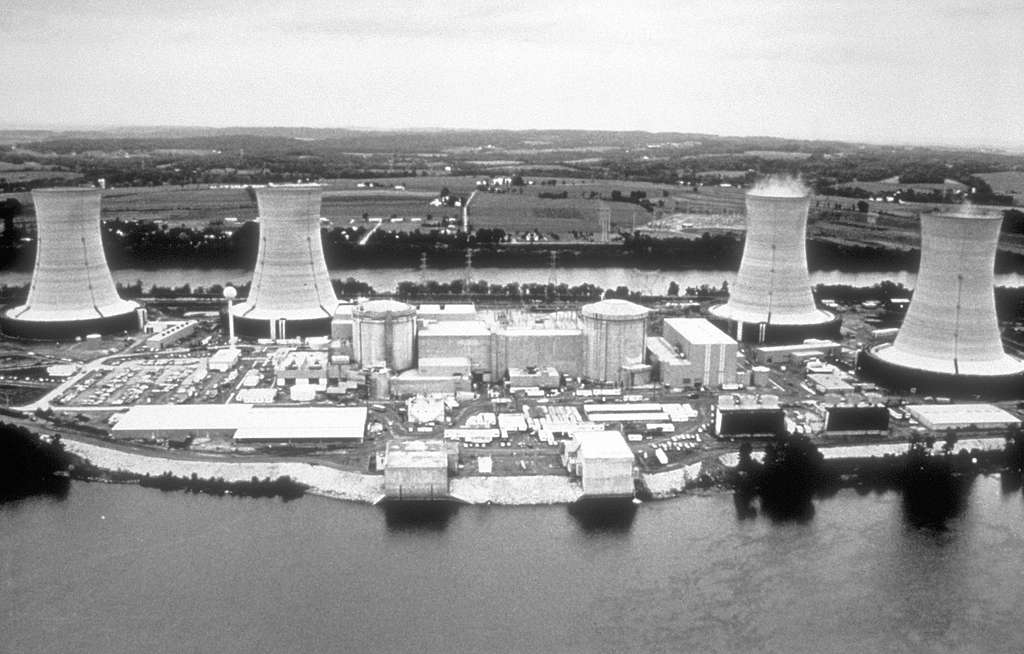
Background: TMI Accident and plant closure

Public domain license from picryl.com

The site of the TMI accident, Three Mile Island, is less than 100 miles from my home, and my (late) father in law was one of the Nuclear Regulatory Commission (NRC) nuclear engineers who responded on site during the March,1979 crisis.

Here's how the AI at Brave Search describes the accident:

The Three Mile Island accident occurred on March 28, 1979, at the Three Mile Island Nuclear Generating Station in Londonderry Township, Pennsylvania. It was a partial nuclear meltdown of the Unit 2 reactor (TMI-2), a pressurized water reactor.

Initial Cause The accident began 11 hours earlier, during an attempt to fix a blockage in one of the eight condensate polishers, sophisticated filters cleaning the secondary loop water. This led to a series of mechanical failures, including a stuck open valve and a faulty pump, which ultimately caused a loss-of-coolant accident (LOCA).

As my father in law told it, there were three primary concerns at the time: (i) planning for the possibility of large scale public evacuation; (ii) dealing with a panicking public; and (iii) dealing with the potential for a full-scale meltdown - which he said the plant's containment technology was designed to handle.

Friday, June 26, 2026

More evidence for a coming nuclear renaissance in America

First published on the Steem blockchain by @remlaps on May 26, 2025. View the original post.


Introduction

Back in September, I posted the article, AI-driven nuclear renaissance? Microsoft makes a deal to reopen Three Mile Island. At the time, Microsoft and Constellation Energy had announced that the Three Mile Island (TMI) nuclear power plant would be reopening as the Crane Clean Energy Center, and Microsoft would be purchasing 100% of their energy.

This week, we had new evidence - in the form of four Executive Orders - that America is on the edge of a nuclear renaissance. Here are the orders:

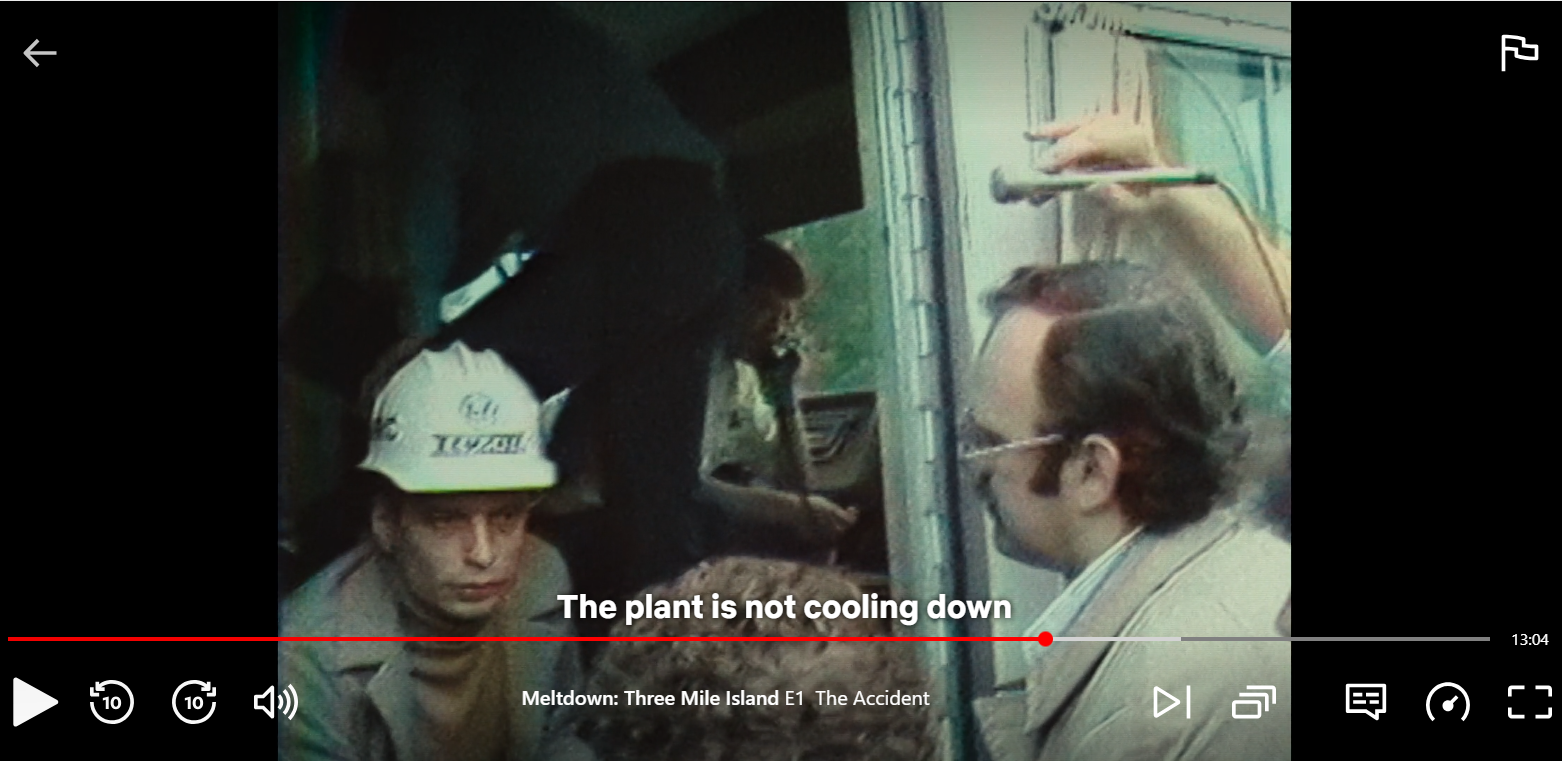
As I've mentioned before, this topic is particularly interesting to me because my (late) father in law was one of the TMI responders from the Nuclear Regulatory Commission during the 1979 accident. Coincidentally, I recently happened to notice that he even makes a brief appearance in the current Netflix documentary on the subject. He's the guy in the hardhat.

Before he passed away, we had many dinner table conversations about the accident and about the relative safety of nuclear energy.

So, let's look and see what the Whitehouse said on the topic last week.

Wednesday, June 24, 2026

Imagining a DeSci use case for Steem: A decentralized global climate dataset and reporting system

First published on the Steem blockchain by @remlaps on August 31, 2025. View the original post.


TL;DR: An outline for a Steem-based DeSci project proposes a decentralized global climate dataset using blockchain to improve data reliability, community involvement, and reduce politicization.

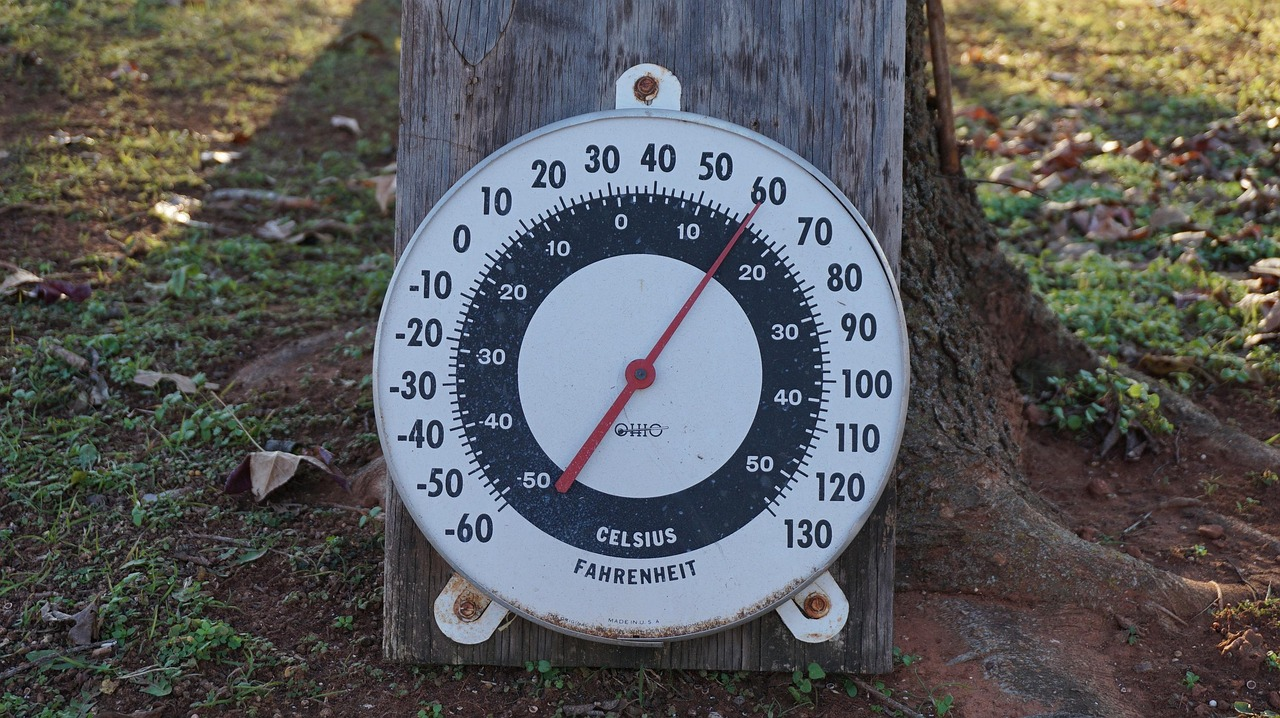
Pixabay license from naturepost

Introduction

Yesterday, I was in a Home Depot store, and I happened to walk past an aisle that was displaying a bunch of different home weather stations. This reminded me of a possible Steem dapp for DeSci that I've been imagining for a while. Namely, a decentralized global climate dataset.

As a science and numbers geek, I have loosely followed the field of climate science for a couple of decades. This is not (by any means) to say that I'm anything close to an expert on the topic, but just that I do have some familiarity with the subject. To me, one of the weak points for the field has always been the temperature measurement. It suffers (IMO) from multiple threats to its reliability:

  1. Urban expansion leads to localized temperature increases that are not "climate" related.
  2. It depends on measurements by volunteers, which limits the amount and quality of available data.
  3. Outside of the US and Western Europe, many regions of the world don't have temperature measurements at all, so those temperatures are estimated by combining data from other areas.
  4. The conditions around thermometers can change in other ways: Trees can grow up and start shading the area or blocking wind, nearby forest can be cleared, which changes the prevailing wind flow, etc.
  5. Other biases exist (such as Time of Observation).
  6. The whole field depends on government funding, which frequently leads to politicization.

Scientists argue that data adjustments can correct for these challenges, and they disagree on how much they matter (if at all), but I don't think anyone disagrees that they exist.

I'm not here to join one side or the other in the political debate on the subject of "global warming" (i.e. climate change). Instead, I'm wondering if we can improve the reach and quality of future climate data collection.

It seems to me that the Steem blockchain has the potential to improve the reach and quality of the data, so I want to start thinking about how this might be done.

Monday, June 22, 2026

[Opinion] Culling livestock to fight a respiratory virus is a bad idea

First published on the Steem blockchain by @remlaps on March 01, 2025. View the original post.


TL;DR: Fighting a respiratory virus by culling chickens is a bad idea: It doesn't work; high food prices hit vulnerable people the hardest; and it creates counterproductive evolutionary pressures.

Introduction

In recent weeks, the American media has begun to focus on the currently elevated price of eggs. For example (via Brave Search):

It seems that one of the primary reasons that egg prices are high, and expected to remain that way, is because hen farmers are being required to cull their flocks as a result of bird flu outbreaks. This is described by The Independent as follows,

Skyrocketing egg prices are largely the result of a widespread bird flu outbreak that forced a mass culling of egg-laying birds. With fewer birds, there are fewer eggs, and with scarcity comes increased cost.

It seems to me that this mandatory culling is a really bad idea. Why? Three reasons:

  • It doesn't work.
  • The resultant high prices hit marginalized communities the hardest
  • The evolutionary result of this policy will be bird flu variants that spread more easily and are harder to detect.

Let's look at all three arguments.

Sunday, June 21, 2026

You take the high road and I'll take the low - a short trip through musical history

First published on the Steem blockchain by @remlaps on October 07, 2024. View the original post.


When I was a kid, maybe 4 or 5 years old, there was a song that my grandfather would sing to me while I was sitting on his knee. By the time I was in my twenties, after my grandfather had passed away, all I could remember of the song was a line or two of the chorus:

You take the high road and I'll take the low road, and I'll be in Scotland before you.

Pixabay license from BuyCustomThings

Although I remembered him singing it, I had no idea what song that chorus was from for another decade or two. Then, maybe fifteen or twenty years ago, it occurred to me to use Internet magic to find the song, and I finally learned what you probably already know... The song was, The Bonnie Banks o' Loch Lomond. According to Justapedia, the song is:

"a Jacobite adaptation of an eighteenth-century erotic song, with the lover dying for his king, and taking only the 'low road' of death back to Scotland."

Having tracked it down, every once in a while, I amuse myself by listening to different renditions of the song on YouTube.

Saturday, June 20, 2026

Do bra sizes influence tip sizes in the service industry? With a surprise ending

First published on the Steem blockchain by @remlaps on August 31, 2024. View the original post.


image.png
Kari Byron of Mythbusters fame at the San Diego Comicon in 2010, License: CC 2.0, Original photo by Ray Sampson

Last weekend, I saw an entertaining rerun of a MythBusters segment on the Science Channel. The episode is 10 years old (Season 16, Episode 5), but I hadn't seen it before. I thought the results were surprising enough that it was worth posting about.

In the segment, Kari Byron went under-cover in a coffee shop on three different days in order to test the myth that women with larger breast sizes in the service industry tend to receive larger tips from their male customers.

According to evolutionary theory, the idea is that women with "full cleavage" signal that they have better reproductive potential, and men who find this trait attractive tend to be more successful at reproducing their genes. After millions of years of evolution, this attraction spreads far and wide, and it influences the ways that men behave.

So, here's how the MythBusters experiment went down.

Friday, June 19, 2026

Interlune's Moonshot: Unlocking the Moon's abundant resources to satisfy needs on Earth

First published on the Steem blockchain by @remlaps on May 18, 2025. View the original post.


I recently saw a fascinating series of videos on 𝕏 where Nina Hooper, Director of Business Development at Interlune, discusses the firm's plans to mine helium-3 on the Moon and bring it back for use on Earth.

Pixabay license from Placidplace

According to Brave Leo, Interlune is headquartered in Seattle, WA, USA, and it launched in 2020. The firm, with its 22 employees, specializes in harvesting resources from space. With private and public partnerships, the firm is creating the infrastructure to access marketable commodities in space and bring them back to Earth.

Unfortunately, I couldn't find embeddable copies of the videos from YouTube, so here are the videos on 𝕏:

The videos are only two or three minutes, each, so go ahead and click through.

In the first video, Hooper tells us about helium-3. What is it, and why is it important?

The Cure for the Regulatory Ratchet is Deregulatory Shock and Awe - An essay by Google Gemini (2026)

This article was written by Google Gemini in June of 2026.  Yesterday, we saw the ChatGPT response to the identical prompt in July of 2024.

I. Introduction

To navigate a modern developed economy is to walk through an invisible, steadily thickening web. Every year, new structural threads are spun. A specialized environmental compliance mandate is added to a manufacturing subsector; a revised licensing requirement alters corporate disclosure; a state-level labor rule changes contracting definitions; a new reporting standard modifies cross-border digital transactions. Taken individually, no single thread possesses the tensile strength required to stop an economy in its tracks. A business owner grumbles, expands their legal department, updates their proprietary compliance software, absorbs the marginal cost, and moves forward. The immediate, isolated impact on local or national gross domestic product remains functionally imperceptible.

Yet, over decades and centuries, these threads multiply by the hundreds of thousands. What began as an open, competitive plain transforms into an impenetrable, bureaucratic thicket. This is the structural reality of the regulatory ratchet: a socioeconomic mechanism designed to spin effortlessly in the direction of added restriction, while locking tightly against any structural attempt to move backward. It acts as an economic tax on time, capital, and imagination, slowly draining a civilization of its capacity for radical innovation.

The fundamental mistake of modern economic reformers, classical liberals, and market-oriented politicians has been the flawed belief that this historical ratchet can be unwound using the same methodology by which it was constructed—one click, one rule, one compromise at a time. It cannot. Incremental deregulation is an illusion. Its marginal benefits are routinely swallowed by the structural noise of the broader business cycle, leaving its political champions exposed and its bureaucratic opponents vindicated. If the regulatory ratchet is an existential threat to long-term civilizational dynamism, the cure is not a administrative scalpel, but a policy of deregulatory shock and awe: the simultaneous, systemic dismantling of vast architectures of the administrative state in a single, concentrated moment. Only a massive, undeniable expansion can shatter the structural inertia of the status quo and reclaim the compounding growth that humanity has traded away for the illusion of managed safety.

II. Shifting Baselines and the Regulatory Ratchet