Steem Promoted Posts - Proof of Concept

🚀 Promoted on Steem loading…
Fetching promoted posts…
Showing posts with label robotics. Show all posts

Thursday, September 17, 2026

Life as a geometry problem: Are these the first manmade living organisms?

First published on the Steem blockchain by @remlaps on April 06, 2021. View the original post.


A Tufts University lab has used evolutionary programming to build xenobots, novel organisms that are designed by computer and constructed out of living cells

https://cdn.pixabay.com/photo/2016/03/09/09/17/deer-1245712_960_720.jpg
Pixabay license: source

Introduction

The other day, I shared a link in the Steem Links community to a TED interview with Michael Levin. The interview is titled, The electrical blueprints that orchestrate life.

Frankly, I'm surprised that this topic hasn't made a bigger news splash, or if it has, I'm surprised that I missed it until now. The discussion is fascinating, and after looking over the Levin Lab web site, I thought it deserved to be the subject of a more complete article.

Along with my #steemlinks share the other day, I just found a YouTube embed of the talk:


Most of us are familiar with the idea that DNA contains the instructions that tell our bodies how to grow and develop, but Levin informs us that another component of a body's ability to self-organize is a form of electrical signaling that he calls bioelectricity. In the interview, Levin says that during embryonic development or tissue regeneration, the cells use this bioelectricity to communicate with each other in a way that enables them to make intelligent seeming decisions.

After viewing that TED interview over the week-end, last night I took a look at another interview, recorded in 2012 and posted on YouTube in 2013. It's here:


After listening to those two interviews and skimming through other parts of the Levin Lab's web site, it seems to me that the overarching long-term themes of the team's research include the following:

  • DNA in animals contains the instructions that are used in embryonic development, childhood growth, and for regeneration in species that are naturally capable of it.
  • That information is available throughout an animal's lifetime.
  • Bio-electrical signaling can be used to activate cells in order to make use of that information and harness it for regenerative or healing purposes.
  • It is therefore possible for higher order animals (including people) to regenerate and heal organs and maybe even eyes, limbs, and other extremities.
  • This same signaling can be harnessed by researchers in order to modify the way an organism looks or functions, or even to create totally new organisms.

Sunday, March 22, 2020

Curating the Internet: Science and technology digest for March 22, 2020

IEEE Spectrum's weekly selection of awesome robot videos; A new technique is able to decipher ancient languages by comparing to modern languages along with existing translations; An archaeologist is saving a digital archive of historic sites in the Yukon and using it to create an online virtual exhibit; George R. R. Martin says he's spending coronavirus down-time writing about Westeros; and a Steem essay describes an algorithm to find a longest substring with no repeating characters


Saturday, March 21, 2020

Curating the Internet: Science and technology digest for March 21, 2020

Stanford soft robot operates without hydraulics or pneumatics; $1 million Turing award goes to Pixar pioneers in computer graphics; Developer acceptance increasing for Windows Subsystem for Linux; New map of the Milky Way galaxy reveals at least four spiral arms; and a Steem photo-essay tells us about the mineral, amethyst


Sunday, March 15, 2020

Curating the Internet: Science and technology digest for March 15, 2020

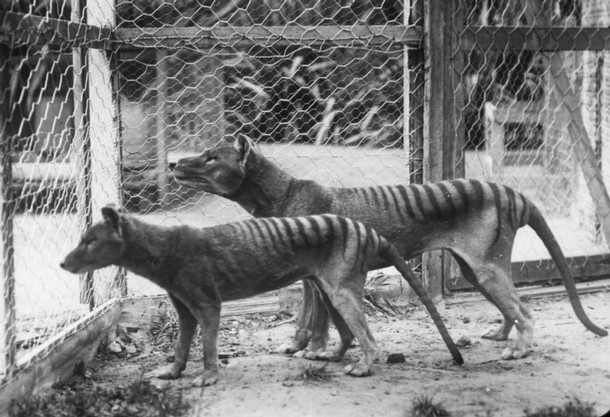
Previously unseen footage of a Thylacine or Tasmanian Tiger; IEEE Spectrum's weekly selection of awesome robot videos; Microsoft announces the end of the line for the Visual Basic programming language; Researchers adapt flu prediction methods to the novel coronavirus; and a Steem essay describing the race to blanket the Earth in satellite-based Internet coverage


Friday, March 13, 2020

Curating the Internet: Science and technology digest for March 13, 2020

Autonomous robots deployed to sterilize hospitals in China; Los Angeles Department of Water and Power accused of cybersecurity coverup; People with celiac disease may soon be able to eat gluten; IBM upgrading Watson to include advances from Project Debater; and a Steem photo-essay describes the engineering of a hundred year old Brownie camera


Wednesday, March 11, 2020

Curating the Internet: Science and technology digest for March 11, 2020

A robot inspired by baby deer that can teach itself to walk; Brave Browser partners with TAP Network to connect BAT tokens directly to retailers; A fireside chat including the controversial and eccentric Craig Wright and economist George Gilder; Master's thesis finds that rocks from Earth and Moon are less similar than previously believed; and a Steem essay discussing the theoretical possibility of "bubbles of nothing" that could destroy the universe


Tuesday, March 10, 2020

Curating the Internet: Science and technology digest for March 10, 2020

Automatic pricing algorithms could reduce competition and raise consumer prices; Robot swarm achieves goals without central orchestration; Lettuce grows on the International Space Station (ISS); Google releases open source TensorFlow Quantum to streamline quantum machine learning; and a @steemhunt post that draws attention to a children's exotrainer for repairing muscular atrophy


Monday, March 9, 2020

Curating the Internet: Science and technology digest for March 9, 2020

Study finds that low-carb diets may prevent and reverse age-related cognitive decline; IEEE Spectrum's weekly selection of awesome robot videos from March 6.; a Steem essay describing the current state of knowledge on the novel coronavirus (COVID-19); A podcast argues that bitcoin mining might be returning to the US, and that it might represent a new business model for power plants; and a TED talk describing research into how specific neural pathways in the brain impact behavior


Sunday, March 8, 2020

Curating the Internet: Science and technology digest for March 7, 2020

Harvard Working Paper suggests that occupational licensing reduces competition and fails to improve consumer satisfaction; More on the health-care robot that automates needle insertion for blood draws and fluid delivery; Glassware in Japan dates to Persian dynasty between years 226 and 551; Study in Finland finds that pet dogs are surprisingly anxious and stressed; and a Steem photo-essay with original nature-photography from Bangladesh


Thursday, March 5, 2020

Curating the Internet: Science and technology digest for March 5, 2020

Partnership between Boston Dynamics and Otto Motors makes warehouse automation safer; A paper claiming a link between the Sun and global warming was retracted. The authors dispute the action.; Computers suggest that between 1700 and 1910, Beethoven was the most influential piano composer and Rachmaninoff was the most innovative; A new AI chip makes image recognition much faster; and a Steem author reviews the Brave Browser


Sunday, March 1, 2020

Curating the Internet: Science and technology digest for March 1, 2020

IEEE Spectrum's weekly selection of awesome robot videos; A report on browser privacy finds that Brave leads the pack, Microsoft Edge and Yandex trail; Theorists still don't totally understand how planes fly; A new study sees brain waves as a form of "what if" testing; and a Steem essay with embedded video describing a first-hand observation of baboons in the wild


Wednesday, February 26, 2020

Curating the Internet: Science and technology digest for February 26, 2020

Researchers suggest that Moore's Law has ended and suggest a path forward; Vote-buying goes mainstream on the EOS blockchain; Tim Draper eschews stocks in favor of Bitcoin and predicts BTC $250,000 by 2022; The first known animal that doesn't breathe has been discovered; and a Steem essay talks about the use of robotics in the oil industry


Tuesday, February 25, 2020

Curating the Internet: Science and technology digest for February 25, 2020

Better information doesn't always lead to better decisions; A new robot passed its first trial at taking blood samples from human patients; Archaeologists discovered a sophisticated Soviet Spy radio when digging for a Roman villa; University of North Carolina survey finds surprisingly broad support for free speech, but also disparities between political conservatives and liberals; and a Steem essay reporting on the Sunday Night Soft Fork


Sunday, February 23, 2020

Curating the Internet: Science and technology digest for February 23, 2020

IEEE Spectrum's weekly selection of awesome robot videos; Bruce Schneier joins the effort to bring the Solid data-ownership protocol to the main-stream; Snap chat set to offer in-app mental health tools; A Youtube video about the possibility that photosynthesis uses a quantum-mechanical search technique; and a Steem essay on the topic of myotoxins or mold toxins


Friday, February 21, 2020

Curating the Internet: Science and technology digest for February 21, 2020

First trial successful for high-precision robot-assisted surgery; A kit has been released for an open source rotary cell phone; Sia launches Skynet, a blockchain based peer to peer web hosting service; A PBS Space Time video discussing the relationship between quantum mechanics and consciousness; and a Steem essay discusses the use of virtual reality in medicine.


Sunday, February 16, 2020

Curating the Internet: Science and technology digest for February 16, 2020

IEEE Spectrum's weekly selection of awesome robot videos; An argument for the existence of free will; A study on reporting on a relationship between university student population sex ratios on one hand and nearby feral cat populations on the other was taken down and classified as "Temporarily Removed after an outraged "Tweet Storm"; A TED talk suggests that online marketplaces can thrive by investing in local entrepreneurs who are disrupted by their incursions; and a Steem post with descriptions and photos of green-blooded skink lizards


Friday, February 14, 2020

Curating the Internet: Science and technology digest for February 14, 2020

The IOTA foundation is responding to a hack; Boston Dynamics' Spot robot reports for duty on an oil rig; An "information ecology" framework for dealing with "fake news" considers misinformation and disinformation to be forms of information pollution; The University of California cancels its subscription to Elsevier; Brush fires uncover a historical stone-carved boomerang in Australia; and a Steem essay describing an ad-hoc operation to rescue an injured wild eagle


Sunday, February 9, 2020

Curating the Internet: Science and technology digest for February 9, 2020

IEEE Spectrum's weekly selection of awesome robot videos; An argument that science is not complete until a good idea has achieved practical adoption; A Stem cell procedure may reduce or eliminate the need for heart transplants; The economics of bitcoin in light of the upcoming halving that's expected in May; and a Steem essay describing an AI effort to find Wuhan coronavirus treatments


Friday, February 7, 2020

Curating the Internet: Science and technology digest for February 7, 2020

A "smart surface" may improve WiFi performance by a factor of 10X; An artist created a virtual traffic jam with a wagon and 99 smart-phones; Genetic analysis reveals Neanderthal ancestry in Africans; Entertainment company uses drones to create smoke-screen background for an airborne laser how; and a Steem essay describing a new AI and mapmaking initiative


Wednesday, February 5, 2020

Curating the Internet: Science and technology digest for February 5, 2020

A TED talk discusses the creation and potential of robots the size of a biological cell; Department of Interior grounds all non-emergency drones; Google releases an open-source application for two factor authentication; Google sends downloaded private photos to the wrong people; and a Steem post with photos of snow under the microscope