Steem Promoted Posts - Proof of Concept

🚀 Promoted on Steem loading…
Fetching promoted posts…

Saturday, August 29, 2026

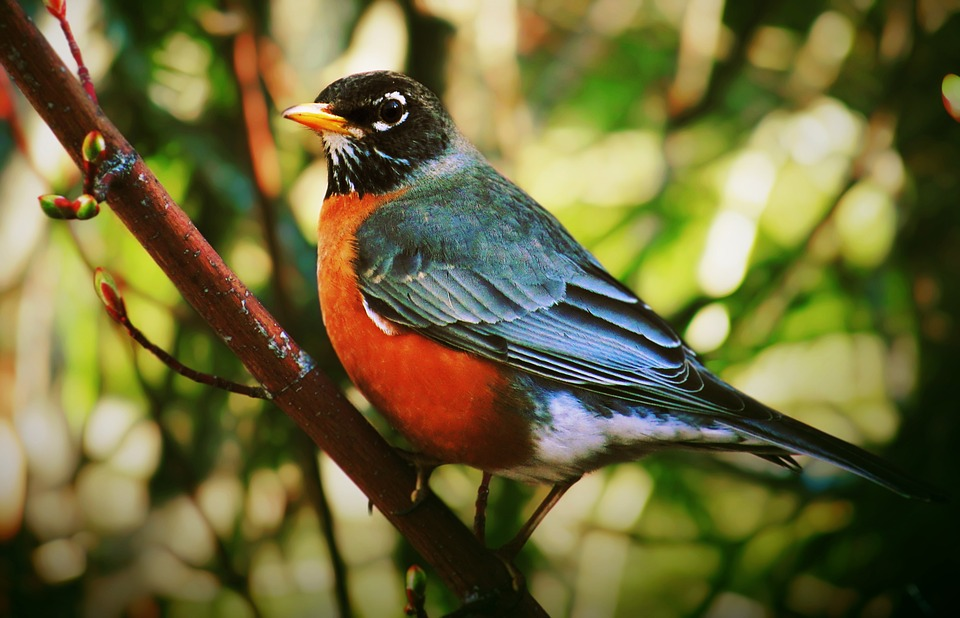
How I used technology this summer to learn about the wild birds in my neighborhood

First published on the Steem blockchain by @remlaps on October 11, 2022. View the original post.


BirdNet is a cell phone app that identifies birds from their songs. Here are my observations after using it for 3 months.

image.png
American Robin: Pixabay license from Daniel Roberts at source

Introduction

Back in June, I posted a SteemLinks article, How I used a Raspberry Pi to automate birdwatching - ZDNet. The underlying source article suggested use of two applications, Merlin, and BirdNet. According to the article, Merlin helps with identification of birds by sight and by sound. BirdNet, on the other hand, only assists with identification by sound.

I immediately downloaded both applications with the intent of trying them out. It turned out that Merlin required email verification, so I terminated my relationship with that one, but kept experimenting with BirdNet for the next few months when I was out in the yard with the dog. Here's what I found.

Wednesday, August 26, 2026

Do human organizations need cheaters? Why or why not?

First published on the Steem blockchain by @remlaps on December 26, 2024. View the original post.


"The price of greatness is responsibility." - Winston Churchill

In last week's post, Suggesting a Steem question of the year for 2025, I followed on a series of articles from Edge.org that posed an annual "Question of the Year" every year from 1998 through 2018. Since Edge discontinued the series, I thought it would be fun to pose a question for 2025 here on Steem.

Pixabay license from Samueles: Aces up the sleeve


You can find the questions and links for each of the Edge.org questions in the previous article.

I borrowed an idea from one of the replies to the the 2018 Edge.org article in order to suggest my own question for discussion here on Steem.

In today's article, I'm going to post my own response article. So, here we go.


Do human organizations need cheaters? Why or why not?

In order to answer this question, I'm going to consider two different meanings for the word, "need".

In the strong sense, if a human organization needs cheaters, it means that the existence of cheaters makes the organization better. In the weaker sense, it simply means that human organizations can't exist without cheaters.

So, let's start first with the weaker sense. Can a human organization exist without cheaters?

Sunday, August 2, 2026

Useful beats truthful: Survival and repetition of ideas in the information ecosystem

First published on the Steem blockchain by @remlaps on April 28, 2024. View the original post.


Viewpoint

Utility trumps truth in the world of information: useful information survives and gets repeated, even if it's not accurate. Truthful information goes extinct if it's not useful.

Background

About 20 years ago, I had the opportunity to participate in a corporate training program with a presentation from our company's chief scientist. One of the few things that I still remember from that training program was his assertion that within 10 or 15 years, "Everything that can be digitized will be digitized." I suppose he reached this conclusion because the rapidly falling cost of digital storage seemed to suggest that storage would eventually be nearly free and inexhaustible.

Here we are twenty years later, and a lot of information has been digitized, but there is also a lot that has not yet been saved. It's conceivable that much of the information that exists at a given moment may never be saved, let alone repeated. The question that occurs to me is, "why does some information survive and reproduce while other information evaporates?"

pixabay license from Vika_Glitter

Introduction

We would like to think that truthful information is more likely to survive and false information is more likely to go extinct - that human knowledge is getting perpetually closer to the target of "truth". But, I'm starting to question this.

A little under a year ago, I posted about Donald Hoffman's book, The Case Against Reality: Why Evolution Hid the Truth from Our Eyes. Shortly after that, I read The Selfish Gene by Richard Dawkins. The Selfish Gene, of course, is a famous book because it introduced the idea of the meme as an evolutionary information concept that is analogous to the biological gene.

If we set these two readings against today's information landscape, maybe it provides some insight into the pervasive reach of "fake news", "misinformation", "disinformation", "malinformation", "Community Notes", and "fact checkers" that seem to dominate much of what we see, hear, and read from modern media sources.

Let's recall some relevant ideas from the two books and see how they apply to the survival and reproduction of information.