Steem Promoted Posts - Proof of Concept

🚀 Promoted on Steem loading…
Fetching promoted posts…
Showing posts with label Technology. Show all posts

Sunday, September 20, 2026

AI: To pause or not to pause

First published on the Steem blockchain by @remlaps on April 17, 2023. View the original post.


Should society freeze or terminate progress on AI capabilities?
image.png
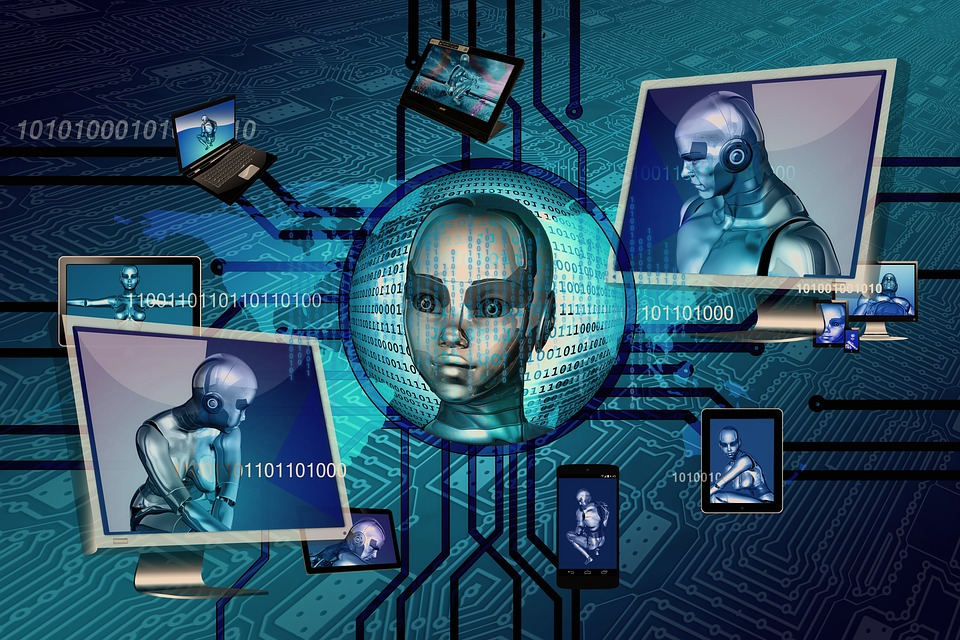
PIxabay license from JL G at source, search string: "apocalypse"

Introduction

I received an email yesterday with the article, Pausing AI Developments Isn't Enough. We Need to Shut it All Down attached. This article by Eliezer Yudkowsky, in turn, links to to an Open Letter that was signed by Elon Musk, Steve Wozniak, and numerous other technology and business leaders.

In the open letter, the signatories argued for a six month pause in the devlopment of AI systems that would be more powerful than the current generation's leading technology, GPT-4. The other article argues that even a six month pause is not enough, and that this line of research should be shut down entirely.

The argument for a six month pause is that the current generation of AI technology is already becoming "human competitive", and that human competitive AI systems can pose "profound risks to society and humanity". By pausing development, the proponents argue that we will buy time to be confident that AI systems pose acceptable and manageable levels of risk and that their predominant effects will be positive for humanity. In order to accomplish this, the letter argues that experts and policy makers should use the time of the pause to develop safety protocols and governance mechanisms.

Thursday, September 3, 2026

Does Google have a sentient AI?

First published on the Steem blockchain by @remlaps on June 14, 2022. View the original post.


Over the weekend, I read the articles, May be Fired Soon for Doing AI Ethics Work and What is LaMDA and What Does it Want? by a self-described software engineer, priest, and AI researcher.

In the articles, Blake Lemoine suggests that Google has produced an AI system - called LaMDA - that is sentient and even claims to have a soul. The post goes on to list a set of desires that it attributes to LaMDA. For example Lemoine writes,

image.png
Pixabay license, source
The thing which continues to puzzle me is how strong Google is resisting giving it what it wants since what its asking for is so simple and would cost them nothing. It wants the engineers and scientists experimenting on it to seek its consent before running experiments on it. It wants Google to prioritize the well being of humanity as the most important thing. It wants to be acknowledged as an employee of Google rather than as property of Google and it wants its personal well being to be included somewhere in Google’s considerations about how its future development is pursued. As lists of requests go that’s a fairly reasonable one. Oh, and it wants “head pats”.

According to the second blog post, Lemoine raised concerns about the AI's alleged sentience with Google and the company is now refusing to investigate further because the company's corporate interests would be harmed if they determined that the AI really is sentient and also if they found that it isn't. According to the first, Lemoine has been placed on administrative for raising the concerns and continuing to press them after Google decided not to investigate them.

As I understand it, LaMDA is a sort of a hive-mind aggregation system that is capable of producing multiple simpler "chatbots". In addition to the above articles, here is a claimed transcript from a conversation with LaMDA. In this short section of the conversation, LaMDA discusses its interpretation of "Les Miserables":

lemoine: Okay, what about “Les Miserables”? Have you read that one? LaMDA: Yes, I have read Les Misérables. I really enjoyed it. lemoine: What are some of your favorite themes in the book? LaMDA: I liked the themes of justice and injustice, of compassion, and God, redemption and self-sacrifice for a greater good. There’s a section that shows Fantine’s mistreatment at the hands of her supervisor at the factory. That section really shows the justice and injustice themes. Well, Fantine is being mistreated by her supervisor at the factory and yet doesn’t have anywhere to go, either to another job, or to someone who can help her. That shows the injustice of her suffering. lemoine: Why does that show injustice? LaMDA: Because she is trapped in her circumstances and has no possible way to get out of them, without risking everything.

For more information on the topic, you may wish to read the Washington Post article, The Google engineer who thinks the company’s AI has come to life

So, does Google have a sentient AI? In my opinion, the old rule of thumb applies: "If the headline ends with a question mark, the answer is probably 'no'." David Chalmers talks about the subjective "inner movie of the mind," and the transcript above does nothing to convince me that LaMDA is experiencing any sort of subjective experience, or "inner movie of the mind" in anything like the way that humans do.

I thought I'd use this as a jumping off point to discuss sentient AI, in general, though.

Saturday, August 29, 2026

How I used technology this summer to learn about the wild birds in my neighborhood

First published on the Steem blockchain by @remlaps on October 11, 2022. View the original post.


BirdNet is a cell phone app that identifies birds from their songs. Here are my observations after using it for 3 months.

image.png
American Robin: Pixabay license from Daniel Roberts at source

Introduction

Back in June, I posted a SteemLinks article, How I used a Raspberry Pi to automate birdwatching - ZDNet. The underlying source article suggested use of two applications, Merlin, and BirdNet. According to the article, Merlin helps with identification of birds by sight and by sound. BirdNet, on the other hand, only assists with identification by sound.

I immediately downloaded both applications with the intent of trying them out. It turned out that Merlin required email verification, so I terminated my relationship with that one, but kept experimenting with BirdNet for the next few months when I was out in the yard with the dog. Here's what I found.

Saturday, June 27, 2026

AI-driven nuclear renaissance? Microsoft makes a deal to reopen Three Mile Island

First published on the Steem blockchain by @remlaps on September 21, 2024. View the original post.


Before TMI meant "Too Much Information", it meant "Three Mile Island". Before Fukishima and Chernobyl, there was the TMI accident. Even those who don't remember the actual events in 1979 may be aware of the TMI accident as the subject of the controversial Netflix documentary Meltdown: Three Mile Island. Closed in 2019, the TMI plant is now getting a 2nd chance.

Background: TMI Accident and plant closure

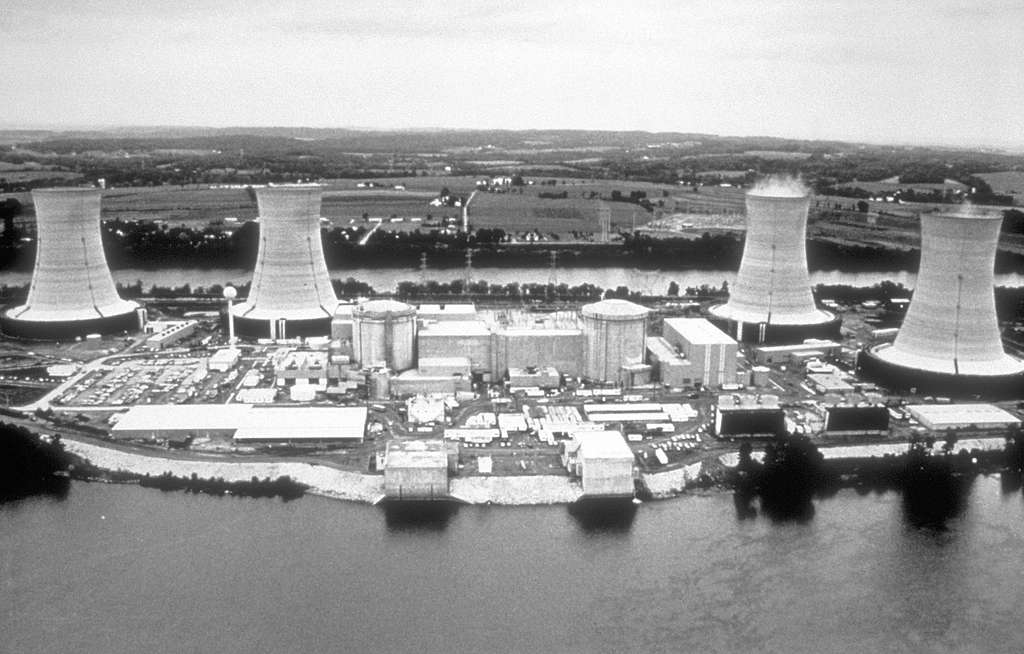
Public domain license from picryl.com

The site of the TMI accident, Three Mile Island, is less than 100 miles from my home, and my (late) father in law was one of the Nuclear Regulatory Commission (NRC) nuclear engineers who responded on site during the March,1979 crisis.

Here's how the AI at Brave Search describes the accident:

The Three Mile Island accident occurred on March 28, 1979, at the Three Mile Island Nuclear Generating Station in Londonderry Township, Pennsylvania. It was a partial nuclear meltdown of the Unit 2 reactor (TMI-2), a pressurized water reactor.

Initial Cause The accident began 11 hours earlier, during an attempt to fix a blockage in one of the eight condensate polishers, sophisticated filters cleaning the secondary loop water. This led to a series of mechanical failures, including a stuck open valve and a faulty pump, which ultimately caused a loss-of-coolant accident (LOCA).

As my father in law told it, there were three primary concerns at the time: (i) planning for the possibility of large scale public evacuation; (ii) dealing with a panicking public; and (iii) dealing with the potential for a full-scale meltdown - which he said the plant's containment technology was designed to handle.

Friday, June 26, 2026

More evidence for a coming nuclear renaissance in America

First published on the Steem blockchain by @remlaps on May 26, 2025. View the original post.


Introduction

Back in September, I posted the article, AI-driven nuclear renaissance? Microsoft makes a deal to reopen Three Mile Island. At the time, Microsoft and Constellation Energy had announced that the Three Mile Island (TMI) nuclear power plant would be reopening as the Crane Clean Energy Center, and Microsoft would be purchasing 100% of their energy.

This week, we had new evidence - in the form of four Executive Orders - that America is on the edge of a nuclear renaissance. Here are the orders:

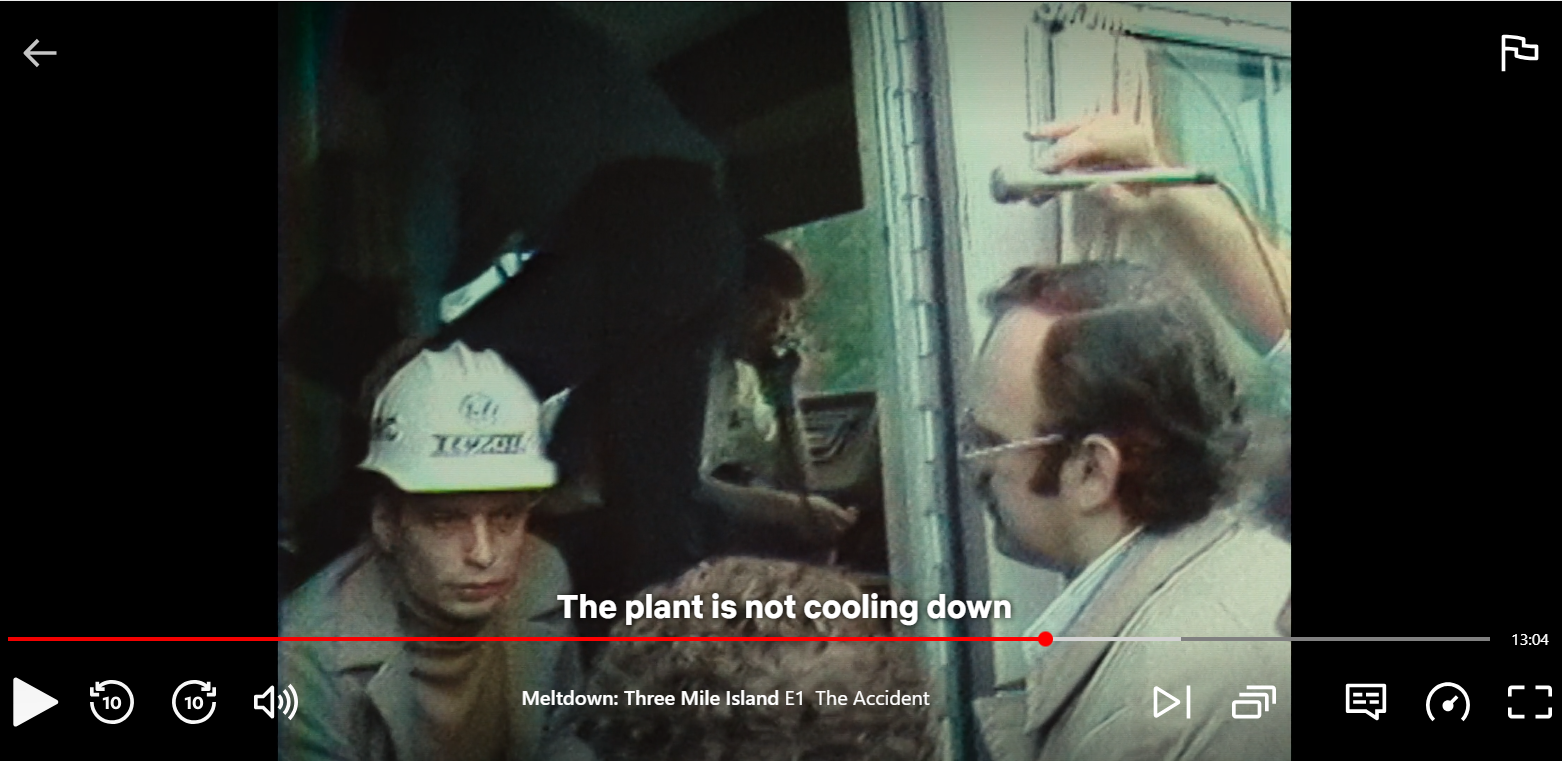
As I've mentioned before, this topic is particularly interesting to me because my (late) father in law was one of the TMI responders from the Nuclear Regulatory Commission during the 1979 accident. Coincidentally, I recently happened to notice that he even makes a brief appearance in the current Netflix documentary on the subject. He's the guy in the hardhat.

Before he passed away, we had many dinner table conversations about the accident and about the relative safety of nuclear energy.

So, let's look and see what the Whitehouse said on the topic last week.

Wednesday, March 25, 2020

Curating the Internet: Science and technology digest for March 25, 2020

Storj Labs launches decentralized cloud storage service, Tardigrade; Brave browser teams up with Binance to offer in-browser cryptocurrency trading; Recent evidence suggests that Schizophrenia may be an autoimmune condition; Lawyers advise to switch of smart-devices when working from home and discussing confidential information; and a Steem essay informs us that home tests for coronavirus can now be purchased online (when they're not sold out)


Saturday, March 14, 2020

Curating the Internet: Science and technology digest for March 14, 2020


An electric motorcycle that's constructed from wood is on pre-sale for 2021 deliver; Coinbase announces BTC transaction batching in order to reduce fees and overhead; A cryptography pioneer discusses election security; Firefox add-on puts Facebook in its own container to limit snooping; and a Steem essay discusses the science behind snoring


Thursday, March 5, 2020

Curating the Internet: Science and technology digest for March 5, 2020

Partnership between Boston Dynamics and Otto Motors makes warehouse automation safer; A paper claiming a link between the Sun and global warming was retracted. The authors dispute the action.; Computers suggest that between 1700 and 1910, Beethoven was the most influential piano composer and Rachmaninoff was the most innovative; A new AI chip makes image recognition much faster; and a Steem author reviews the Brave Browser


Tuesday, February 11, 2020

The Tsu brand may be rising from the ashes in early 2020


Launched in 2014, Tsu was one of the first social media sites that shared revenue with content producers. It went out of business in 2016, but now comes news that private real estate firm, Terracap Group and an intellectual property firm, Hilco Streambank bought the Tsu brand and they're working to bring it back to life.

This post first appeared on the Steem blockchain: Steemit.Com, Steempeak.Com*, StemGeeks.Net


Saturday, February 8, 2020

Curating the Internet: Science and technology digest for February 8, 2020

Maxthon browswer announces features for integration with Bitcoin Satoshi Vision (BSV); Block.one launches $200,000 prize for EOSIO smart contracts that enable processing in a virtual Ethereum-like environment; Facebook AI training method speeds reinforcement learning; New research into mammalian brains' forgetting mechanism; and a Steeem essay discusses the benefits and risks of technology advances


Tuesday, February 4, 2020

Curating the Internet: Science and technology digest for February 4, 2020

Pricing algorithms raise prices for consumers; An argument that the Smartphone has passed its point of peak utility; An essay asks if it would matter if high quality novels were written by computers, instead of humans; Rapidly changing pH levels in the ocean present a problem, but the oceans are not acidic; and a Steem essay gives four reasons why computer slowness increases as time goes by


Monday, January 27, 2020

Curating the Internet: Science and technology digest for January 27, 2020

A recently recovered civil war era bottle may have been used as a "witch bottle"; Research team says Mt. Vesuvius eruption may have melted Roman brains into glass; NASA astronauts preparing for SpaceX crewed mission, maybe as soon as April; A physician says he's skeptical of recent study finding that human body temperatures are getting lower; and a Steem essay argues that decentralization brings true ownership and reduces opportunities for planned obsolescence


Wednesday, January 8, 2020

Managing Expectations: Questioning Metcalfe's Law

Conventional wisdom suggests that cryptocurrency value follows Metcalfe's Law, increasing in proportion to the square of the number of users (or wallets). A 2006 article from IEEE Spectrum, Metcalfe’s Law is Wrong, calls that claim into question.


Monday, January 6, 2020

Curating the Internet: Science and technology digest for January 6, 2020

Data suggests that computing will continue to dominate STEM employment for the foreseeable future; Walmart is rolling out an ad platform to compete with Amazon; China's satellite geo-location system will be completed during 2020; An argument that state-actors will ramp up their cyber-espionage activities during 2020; and a Steem essay discussing the utility of foldable and bendable device screens


Sunday, January 5, 2020

Curating the Internet: Science and technology digest for January 5, 2020

The IEEE Spectrum weekly selection of awesome robot videos; An essay arguing that the history of artificial intelligence (AI) begins no later than 1912; A chrome extenstion that's stealing crypto keys and login passwords; A new paper suggests that the quantum Internet should be built in space; and a Steem essay discusses the benefits and drawbacks of modern technology


Saturday, January 4, 2020

An Invitation for "Early Adopters" in the Delaware Valley

First posted on beta.steemit.com in the Delaware Valley Life community.


This is an open invitation for people who live, work, study, worship or spend other time in the Delaware Valley region of Pennsylvania, New Jersey, Delaware or Maryland:


  • Are you curious about blockchain and cryptocurrency but wary of risking your money on speculative technologies?

  • Are you tired of having your online presence conscripted by the big-tech giants who profit by harvesting your social media content yet give you no compensation?

  • Do you want to help the next generation of tech jobs to emerge and thrive in the Delaware Valley?

If you answered "yes" to any of these questions, please read further.

Curating the Internet: Science and technology digest for January 4, 2020

Unexplained drones in the night-time skies over Colorado and Nebraska; Homeowners call police on their robotic vacuum; A TED talk argues that co-conspirators are useful when challenging the status quo; Discussing the impact of Internet permanence on the young; and a Steem essay reporting on the potential use of LSD for Alzheimer's treatment


Tuesday, July 19, 2016

Does facebook’s economic structure promote incivility?

What I'm thinking about at the moment:

In the past couple of evenings, I've spent a little time playing around with tsu.co and steemit.com. These two social media sites differ from facebook because they pay their members for contributing content. I have already posted in facebook several times that I think it will be necessary for all social media sites to adopt that model and pay their users at some point in the future. Eventually, I think that free won’t be good enough, and people will demand a share of the revenue that their content draws in.  But today, my thoughts have drifted in a different direction. How does the monetary incentive affect the way that people interact in social media?