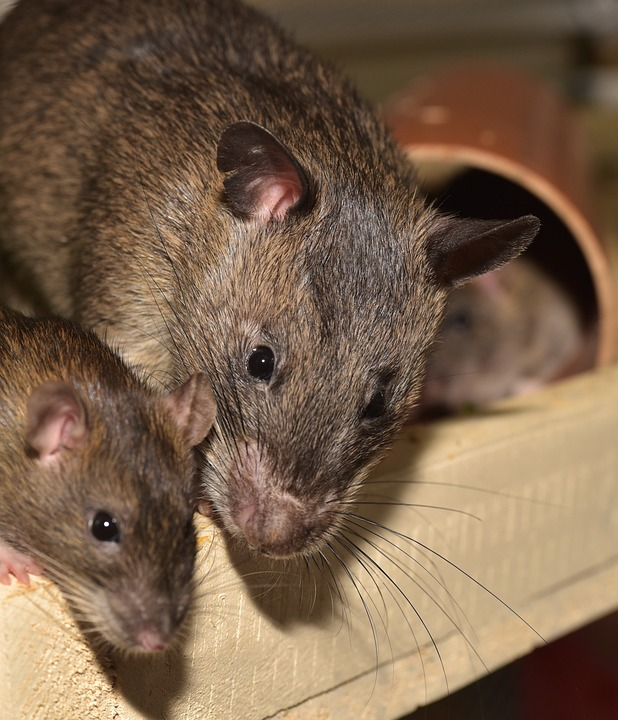
In an advance toward the possible future treatment of major brain injuries, human brain cells implanted into injured rat brains were observed responding to visual stimuli.
Back in October, I posted about scientists from Stanford who put human neurons into rats' brains. In that work, the researchers observed that the human brain organoid was able to grow and form connections inside the rat brain.
There was another study in January where human brain cells were implanted into healthy mice and observed to respond to light.
A Tufts University lab has used evolutionary programming to build xenobots, novel organisms that are designed by computer and constructed out of living cells
Frankly, I'm surprised that this topic hasn't made a bigger news splash, or if it has, I'm surprised that I missed it until now. The discussion is fascinating, and after looking over the Levin Lab web site, I thought it deserved to be the subject of a more complete article.
Along with my #steemlinks share the other day, I just found a YouTube embed of the talk:
Most of us are familiar with the idea that DNA contains the instructions that tell our bodies how to grow and develop, but Levin informs us that another component of a body's ability to self-organize is a form of electrical signaling that he calls bioelectricity. In the interview, Levin says that during embryonic development or tissue regeneration, the cells use this bioelectricity to communicate with each other in a way that enables them to make intelligent seeming decisions.
After viewing that TED interview over the week-end, last night I took a look at another interview, recorded in 2012 and posted on YouTube in 2013. It's here:
After listening to those two interviews and skimming through other parts of the Levin Lab's web site, it seems to me that the overarching long-term themes of the team's research include the following:
DNA in animals contains the instructions that are used in embryonic development, childhood growth, and for regeneration in species that are naturally capable of it.
That information is available throughout an animal's lifetime.
Bio-electrical signaling can be used to activate cells in order to make use of that information and harness it for regenerative or healing purposes.
It is therefore possible for higher order animals (including people) to regenerate and heal organs and maybe even eyes, limbs, and other extremities.
This same signaling can be harnessed by researchers in order to modify the way an organism looks or functions, or even to create totally new organisms.
Modern immunotherapy is making strides to improve the odds for brain cancer patients.
Many people may remember that Senator Edward (Ted) Kennedy was diagnosed with brain cancer in May, 2008, and died from it about 15 months later, in August of 2009. For me, Kennedy's cancer progression was one of those news cycles that intersected with the personal life, because my mother was diagnosed with brain cancer around the same time, in the summer of 2009, and she died from it half a year later, in January of 2010.
One of my lasting memories about Kennedy's death is the pessimistic tone of commentary from media personalities at the time. As they commented on the almost hopeless odds that Kennedy was facing, I was - of course - thinking about how their commentary applied to my own mother. And it turned out that they were right. My mom tried surgical treatment and chemotherapy, but in the end it didn't seem to make much difference. In a mere few months, she went from a healthy and vibrant retiree traveling around the country to a wheelchair bound cancer patient, and even that stage passed quickly. In a few more months, she was gone at the relatively young age of 61.
TL;DR: An outline for a Steem-based DeSci project proposes a decentralized global climate dataset using blockchain to improve data reliability, community involvement, and reduce politicization.
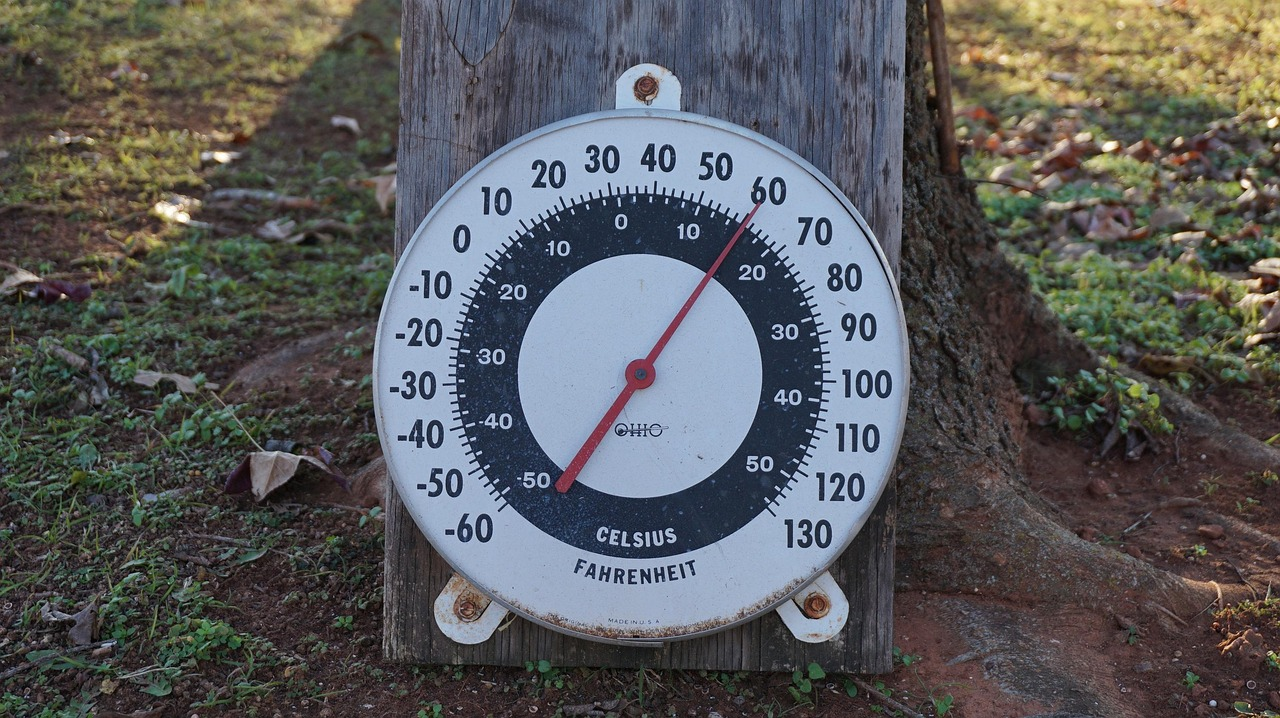
Yesterday, I was in a Home Depot store, and I happened to walk past an aisle that was displaying a bunch of different home weather stations. This reminded me of a possible Steem dapp for DeSci that I've been imagining for a while. Namely, a decentralized global climate dataset.
As a science and numbers geek, I have loosely followed the field of climate science for a couple of decades. This is not (by any means) to say that I'm anything close to an expert on the topic, but just that I do have some familiarity with the subject. To me, one of the weak points for the field has always been the temperature measurement. It suffers (IMO) from multiple threats to its reliability:
It depends on measurements by volunteers, which limits the amount and quality of available data.
Outside of the US and Western Europe, many regions of the world don't have temperature measurements at all, so those temperatures are estimated by combining data from other areas.
The conditions around thermometers can change in other ways: Trees can grow up and start shading the area or blocking wind, nearby forest can be cleared, which changes the prevailing wind flow, etc.
The whole field depends on government funding, which frequently leads to politicization.
Scientists argue that data adjustments can correct for these challenges, and they disagree on how much they matter (if at all), but I don't think anyone disagrees that they exist.
I'm not here to join one side or the other in the political debate on the subject of "global warming" (i.e. climate change). Instead, I'm wondering if we can improve the reach and quality of future climate data collection.
It seems to me that the Steem blockchain has the potential to improve the reach and quality of the data, so I want to start thinking about how this might be done.
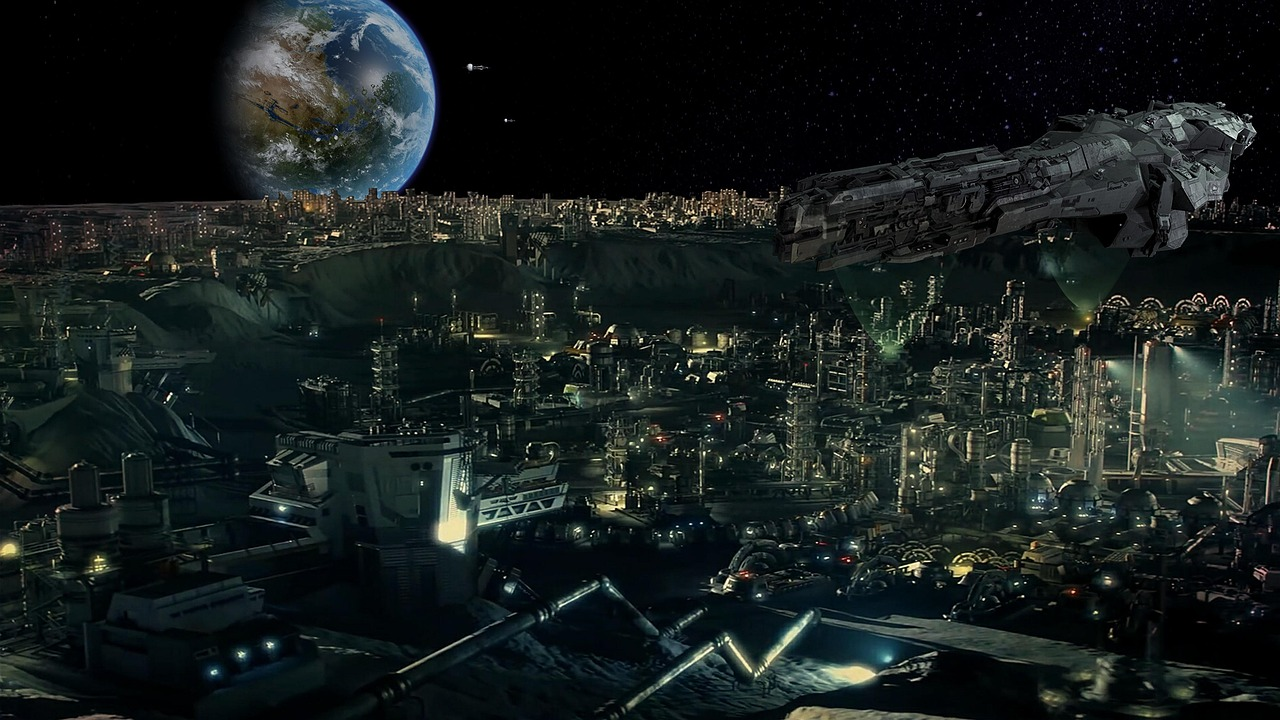
I recently saw a fascinating series of videos on 𝕏 where Nina Hooper, Director of Business Development at Interlune, discusses the firm's plans to mine helium-3 on the Moon and bring it back for use on Earth.
According to Brave Leo, Interlune is headquartered in Seattle, WA, USA, and it launched in 2020. The firm, with its 22 employees, specializes in harvesting resources from space. With private and public partnerships, the firm is creating the infrastructure to access marketable commodities in space and bring them back to Earth.
Unfortunately, I couldn't find embeddable copies of the videos from YouTube, so here are the videos on 𝕏:
[Donald Hoffman](https://sites.socsci.uci.edu/~ddhoff/) argues that all of spacetime is an abstraction for a deeper and unobserved reality. According to this line of reasoning, spacetime only exists when it's being perceived. What do you think?
The Reality Illusion
Introduction
Whatever reality is, it's not what you see. What you see is just an adaptive fiction. -Donald Hoffman
In browsing through the available eBooks from my local library, I came across The Case Against Reality by UC Irvine Professor Emeritus, Donald Hoffman, and I read it over the weekend. The book presents a fascinating discussion on the nature of reality, a topic that has intrigued me for years.
In this book, Hoffman uses three major frameworks to argue that consciousness - not spacetime - is at the root of reality, and that our perceived reality is very different from the objective reality that actually exists.
The crux of Hoffman's argument relies on something of his own creation, called the Fitness Beats Truth Theorem (FBT), which he conjectured and claims that Chetan Prakash proved. According to this theorem, if perception agents that optimize for evolutionary fitness compete in evolution against perception agents that optimize for truth, natural selection favors the fitness-optimizers and the truth-optimizers go extinct.
In addition to the Fitness Beats Truth theorem, Hoffman also introduces us to the Interface Theory of Perception (ITP). According to this theory, the "reality" that we observe is something akin to an operating system interface. In this view, the things we see are nothing more than avatars and icons that provide useful shortcuts in order to allow us to survive for long enough to reproduce. A file icon on a computer desktop doesn't say anything about the underlying bits on the hard disk. Similarly, ITP argues that when we see an apple or a train or a snake, we're not seeing the reality of those objects, just abstractions that evolution has given us in order to guide our decisions. Provocatively, Hoffman argues that these representations don't even exist at all when nobody is perceiving them.
An electric motorcycle that's constructed from wood is on pre-sale for 2021 deliver; Coinbase announces BTC transaction batching in order to reduce fees and overhead; A cryptography pioneer discusses election security; Firefox add-on puts Facebook in its own container to limit snooping; and a Steem essay discusses the science behind snoring
IEEE Spectrum's weekly selection of awesome robot videos; An argument that science is not complete until a good idea has achieved practical adoption; A Stem cell procedure may reduce or eliminate the need for heart transplants; The economics of bitcoin in light of the upcoming halving that's expected in May; and a Steem essay describing an AI effort to find Wuhan coronavirus treatments
Conventional wisdom suggests that cryptocurrency value follows Metcalfe's Law, increasing in proportion to the square of the number of users (or wallets). A 2006 article from IEEE Spectrum, Metcalfe’s Law is Wrong, calls that claim into question.
Data suggests that computing will continue to dominate STEM employment for the foreseeable future; Walmart is rolling out an ad platform to compete with Amazon; China's satellite geo-location system will be completed during 2020; An argument that state-actors will ramp up their cyber-espionage activities during 2020; and a Steem essay discussing the utility of foldable and bendable device screens
The IEEE Spectrum weekly selection of awesome robot videos; An essay arguing that the history of artificial intelligence (AI) begins no later than 1912; A chrome extenstion that's stealing crypto keys and login passwords; A new paper suggests that the quantum Internet should be built in space; and a Steem essay discusses the benefits and drawbacks of modern technology
Unexplained drones in the night-time skies over Colorado and Nebraska; Homeowners call police on their robotic vacuum; A TED talk argues that co-conspirators are useful when challenging the status quo; Discussing the impact of Internet permanence on the young; and a Steem essay reporting on the potential use of LSD for Alzheimer's treatment