A TED talk gives the research history of the so-called "sex chromosomes"; Scientific theories behind the deja vu experience; A new attack tricks artificial intelligence systems into mischaracterizing images; Cancer research retracted after 14 years and more than 900 citations; and a Steem essay describes a doctor's efforts to prepare for coronavirus in Bangladesh
Steem Promoted Posts - Proof of Concept
🚀
Promoted on Steem
loading…
Fetching promoted posts…
Powered by api.steemit.com · condenser_api.get_discussions_by_promoted · View all on Steemit
Showing posts with label neuroscience. Show all posts
Tuesday, March 24, 2020
Monday, March 9, 2020
Curating the Internet: Science and technology digest for March 9, 2020
Study finds that low-carb diets may prevent and reverse age-related cognitive decline; IEEE Spectrum's weekly selection of awesome robot videos from March 6.; a Steem essay describing the current state of knowledge on the novel coronavirus (COVID-19); A podcast argues that bitcoin mining might be returning to the US, and that it might represent a new business model for power plants; and a TED talk describing research into how specific neural pathways in the brain impact behavior
Sunday, March 1, 2020
Curating the Internet: Science and technology digest for March 1, 2020
IEEE Spectrum's weekly selection of awesome robot videos; A report on browser privacy finds that Brave leads the pack, Microsoft Edge and Yandex trail; Theorists still don't totally understand how planes fly; A new study sees brain waves as a form of "what if" testing; and a Steem essay with embedded video describing a first-hand observation of baboons in the wild
Wednesday, February 12, 2020
Curating the Internet: Science and technology digest for February 12, 2020
Philadelphia fintech panel says blockchain hype died down but growth continues; Harvard faculty discusses the impact of emerging technology on business; An article highlights the long under-appreciated glial brain cells; Why Valentine's Day can be hard on some relationships; and a Steeem post describing an animal trial of 3D printer of synthetic skin for burn victims
Labels:
3D Printing,
blockchain,
business,
Drexel University,
Emerging Technology,
Fintech,
Glial Cells,
Harvard,
neuroscience,
Philadelphia,
Relationships,
Synthetic Skin,
Valentines Day,
Vanguard
Saturday, February 8, 2020
Curating the Internet: Science and technology digest for February 8, 2020
Maxthon browswer announces features for integration with Bitcoin Satoshi Vision (BSV); Block.one launches $200,000 prize for EOSIO smart contracts that enable processing in a virtual Ethereum-like environment; Facebook AI training method speeds reinforcement learning; New research into mammalian brains' forgetting mechanism; and a Steeem essay discusses the benefits and risks of technology advances
Sunday, January 26, 2020
Curating the Internet: Science and technology digest for January 26, 2020
IEEE Spectrum's weekly selection of awesome robot videos; Report claims that the AI leader in 2030 will obtain world dominance for the century; Researchers use genetic manipulation to reverse age-related decline in mouse brains; Internal mobility, changing jobs within an organization, is a growing trend in business; and a Steem essay describing a collaborative effort to 3D print incubators for Mason Bees
Wednesday, January 22, 2020
Curating the Internet: Science and technology digest for January 22, 2020
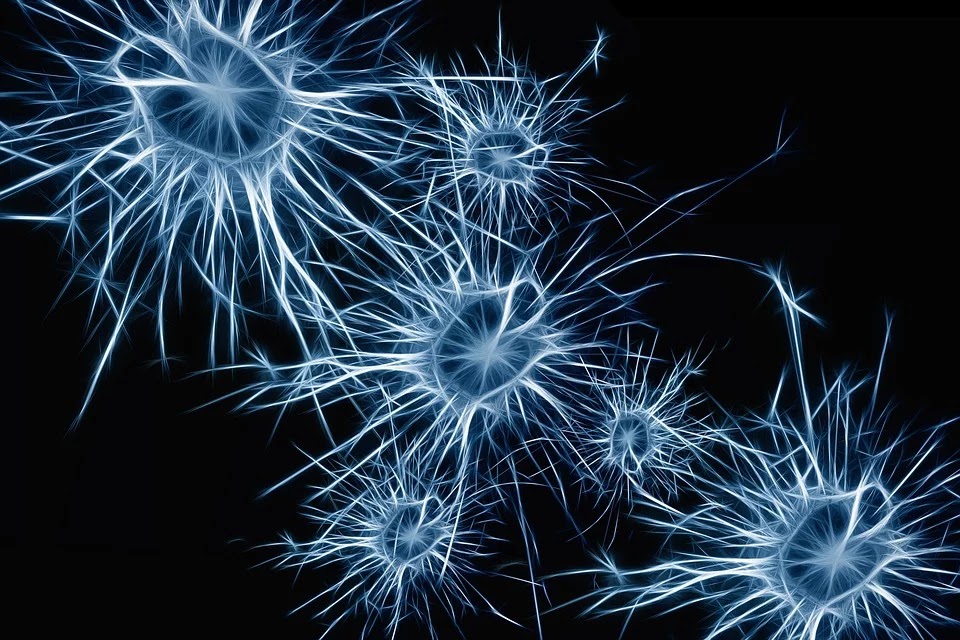
Computation in the brain is more complex than previously known; An argument against altruism in business; An optical illusion may help with treatment of OCD; Google's DeepMind team brings insight to the brain's internal reward mechanism; and a Steem proposal by @openseed that offers a step towards "tokenizing the web"
Wednesday, January 8, 2020
Curating the Internet: Science and technology digest for January 8, 2020
Intel's 17.3" foldable laptop; An argument that a market-based solution is needed for online data and privacy; An IT executive pleads guilty to wire fraud after being accused of running a fake business; Recent progress in understanding the physiology of memories; and a Steem post arguing for a space station around the moon
Labels:
biology,
cybersecurity,
data,
electronics,
fraud,
information security,
infosec,
intel,
internet,
memory,
moon,
neuroscience,
privacy,
space,
spacex
Subscribe to:
Posts (Atom)


