Steem Promoted Posts - Proof of Concept

🚀 Promoted on Steem loading…
Fetching promoted posts…

Sunday, July 19, 2026

Chester County Notables: Samuel Barber, Bayard T. Rustin, and N. C. Wyeth - A random glance at history

First published on the Steem blockchain by @remlaps on September 04, 2019. View the original post.


This post looks at some notable figures from history that I've had the opportunity to learn about in recent years, all of whom had connections to Chester County, Pennsylvania. Samuel Barber was a renowned American composer in the 20th century, Bayard T. Rustin was a civil rights leader who collaborated with Martin Luther King, Jr. and other civil rights activists of the time, and N. C. Wyeth was a widely known American artist.

Introduction
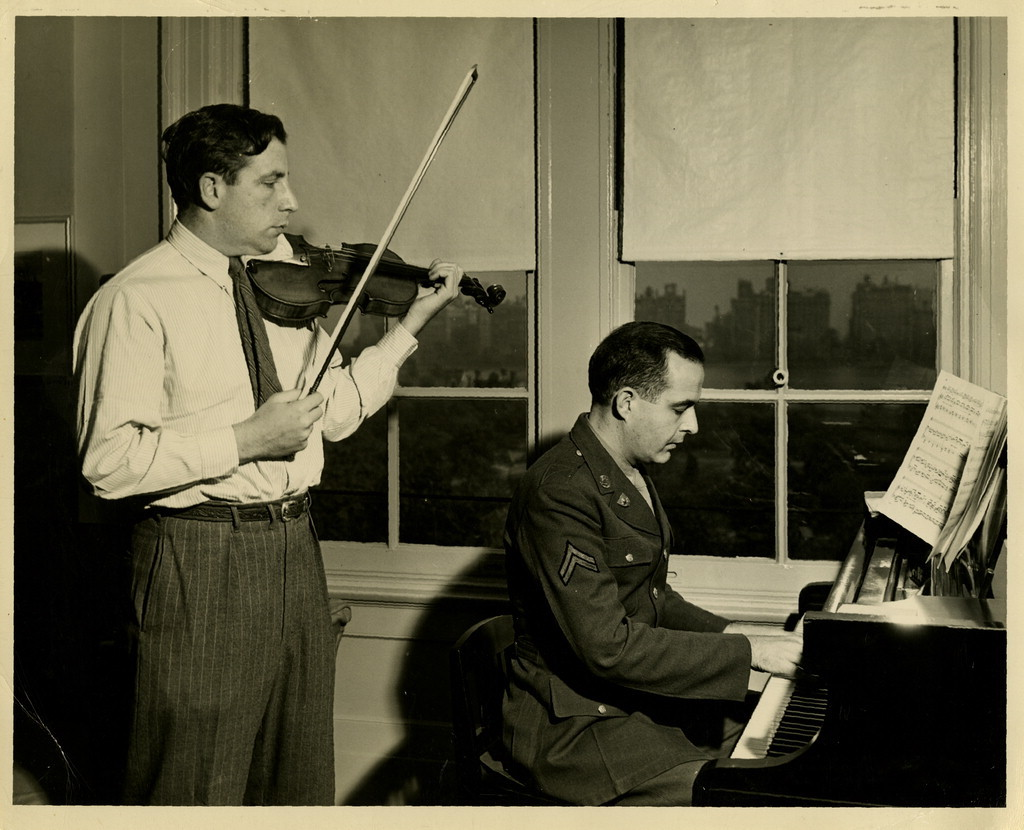
image.png
Roman Totenberg (violin) and Samuel Barber (piano), public domain photo from the US Library of Congress

Here in the introduction, I'll tell you how I happened to learn about these three noteworthy people, and in the following sections, I'll tell you some of what I've learned about their lives, and why they're noteworthy outside of our community.

The reason that I first heard of Samuel Barber is that he was a West Chester native, and, at the age of 12, he was the organist in the church that my family now attends. The first time I remember hearing his name is when it was announced at a 100 year anniversary ceremony for the church organ, and one of the pieces that was played had been composed by him, and donated to the church.

After that, when @cmp2020 went into the high school marching band, we learned that - at the age of 15 - Barber also composed the Alma Mater that is in use by all three of the high schools in the West Chester Area School District. @cmp2020 did an analysis of it last year, on Steem. It's here - Analysis of Rustin High School's Alma Mater (Composed by Our Very Own Samuel Barber), and when we visited West Chester University of PA's school of music, there was a huge mural on the wall with Barber's picture.

Moving on to Bayard T. Rustin. When we moved into this area, there were only 2 high schools in the school district. Some time around 2001 or 2002, I started hearing about plans to build a third, colloquially known as "the New School", because at the time, no one knew what it would be called. This would be the school that @cmp2020 would attend when he reached high school. Eventually, however, I learned that the school opened in 2006, having been named after Bayard T. Rustin, but I still had no idea who he was. I never thought much about it until some years later, when I read the article, The Civil Rights Movement's Unsung Hero, and I thought, "Wait. Can this be the same guy?" So then, my curiosity was piqued. It turns out that like Barber, Rustin was also a West Chester native.

Finally, we come to N. C. Wyeth. Unlike the other two, Wyeth was not born locally, but he moved to Wilmington, DE, for art school, and wound up living in the nearby Chadd's Ford area. The reason I learned about Wyeth, as you may have seen, is that @cmp2020 wrote a composition for a Young Composer's Workshop at the Brandywine River Museum of Art that was inspired by Wyeth's illustrations on display in the museum and from the book, The Boy's King Arthur. If you haven't listened to the composition, you really should (and I'm not saying that just 'cause I'm his dad):

https://youtu.be/sIizMHiRN8c

So that's how I heard of these folks. Now, let's move on to what I've learned about them...

Thursday, July 9, 2026

What does a college visit have to do with Beethoven and Mozart? - A random glance at history

First published on the Steem blockchain by @remlaps on March 18, 2019. View the original post.


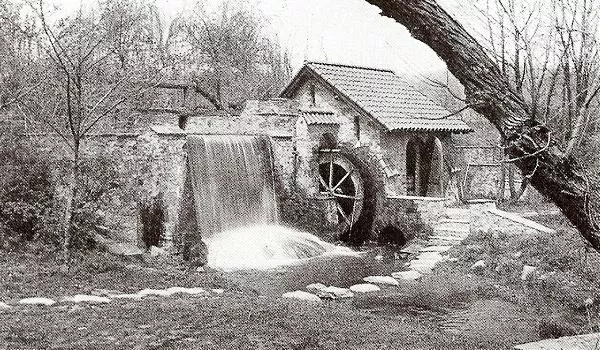
On Friday, @cmp2020 and I went for his first "official" college visit at Eastern University in St. Davids, PA. We had a fun time touring the campus, monitoring a musicianship class, and meeting with admissions and music department personnel. The day also had a surprising tie-in to classical music history.

image.png

The iconic waterwheel at Eastern University
Public domain photo, circa 1913. Source

Aside from a chance comment by the admissions counsellor, there would have been nothing blogworthy about our college visit to Eastern University the other day. The day began in the admissions office, we toured the campus and had lunch in the campus cafeteria with a student tour-guide (Thanks, Collin!), then monitored a musicianship class and returned to the admissions office. Of course, all of that was interesting to a prospective student and his father, but nothing that would qualify for a blog post.

Sunday, July 5, 2026

Hope on the horizon: Recent advances in brain cancer immunotherapy

First published on the Steem blockchain by @remlaps on May 04, 2024. View the original post.


Modern immunotherapy is making strides to improve the odds for brain cancer patients.

Many people may remember that Senator Edward (Ted) Kennedy was diagnosed with brain cancer in May, 2008, and died from it about 15 months later, in August of 2009. For me, Kennedy's cancer progression was one of those news cycles that intersected with the personal life, because my mother was diagnosed with brain cancer around the same time, in the summer of 2009, and she died from it half a year later, in January of 2010.

One of my lasting memories about Kennedy's death is the pessimistic tone of commentary from media personalities at the time. As they commented on the almost hopeless odds that Kennedy was facing, I was - of course - thinking about how their commentary applied to my own mother. And it turned out that they were right. My mom tried surgical treatment and chemotherapy, but in the end it didn't seem to make much difference. In a mere few months, she went from a healthy and vibrant retiree traveling around the country to a wheelchair bound cancer patient, and even that stage passed quickly. In a few more months, she was gone at the relatively young age of 61.

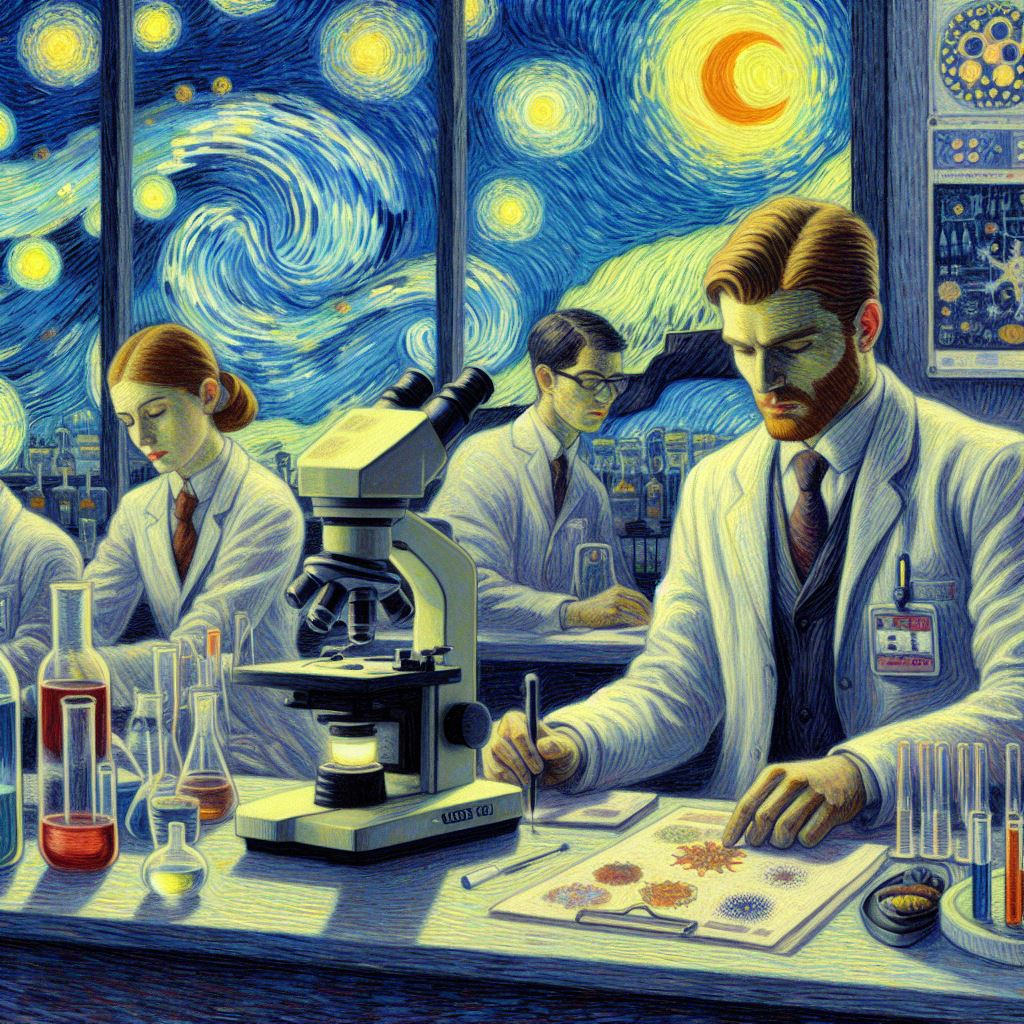
Image by Bing Creator

As a result of this experience, it always catches my attention when I come across news about advances in the treatment of brain cancer. This week, my RSS feed contained some news of this nature. The articles, New Vaccine For Deadly Brain Cancer Shows Incredible Results in Clinical Trial and Brain cancer in children is notoriously hard to treat – a new mRNA cancer vaccine triggers an attack from within describe some promising results from a clinical trial of a new vaccine for brain cancer. Both of those articles are commentaries on newly published research from Cell, RNA aggregates harness the danger response for potent cancer immunotherapy.

As with the treatment covered in my recent article, Revolutionary Canine Cancer Vaccine Shows Promising Results: A Ray of Hope for Man's Best Friend, the product is called a vaccine, but it is only used after a cancer diagnosis. This is explained in Nature's YouTube video, below:

Thursday, July 2, 2026

Spacetime rearranges itself to prevent paradoxes from time travel

First published on the Steem blockchain by @remlaps on December 19, 2022. View the original post.


"Time travel offends our sense of cause and effect—but maybe the universe doesn’t insist on cause and effect." -[Edward M. Lerner](https://www.tor.com/2009/10/16/tropes-and-mundanity)

Introduction

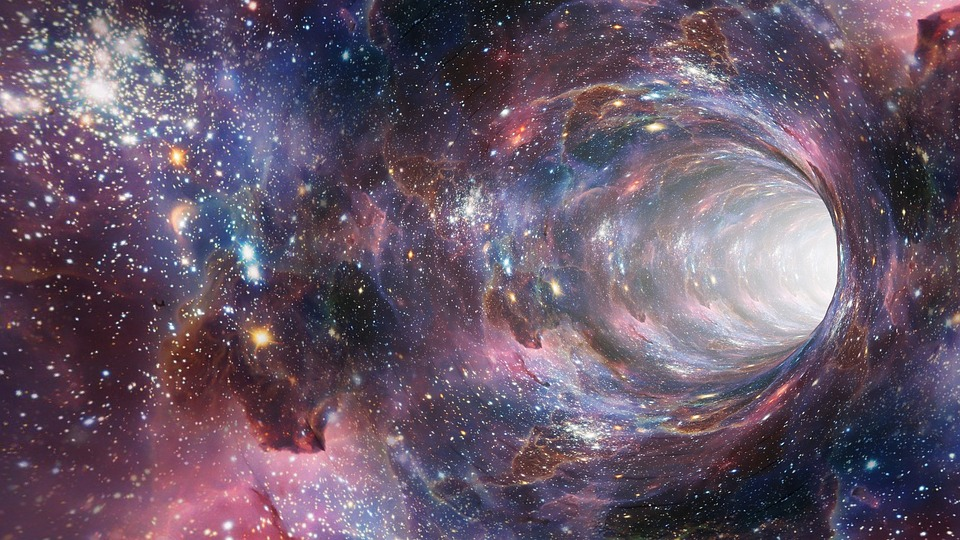
Pixabay license: A wormhole in space
Pixabay license from Genty at source.

Today, Science Alert published the article A Physicist Came Up With Math That Shows 'Paradox-Free' Time Travel Is Plausible, which is an update of a 2020 article on the same topic. The article summarizes the 2020 paper, Reversible dynamics with closed time-like curves and freedom of choice by Germain Tobar and supervised by Fabio Costa. This is an Open Access paper (Creative Commons Attribution 4.0) in the journal, Classical and Quantum Gravity.

According to the paper, Einstein's theory of general relativity opened the door for the possibility of closed time-like curves (CTCs), which are paths through spacetime where an observer can interact with past or future versions of themself. In our intuition, however, this idea is challenged by the notion of the grandfather paradox.

The grandfather paradox is a potential logical problem that would arise if a person were to travel to a past time. The name comes from the idea that if a person travels to a time before their grandfather had children, and kills him, it would make their own birth impossible. So, if time travel is possible, it somehow must avoid such a contradiction.

Classical physics, and human intuition, both suggest that time moves in a single direction where past events determine the current state of the system, and where all parts of the system experience time in the same way. Relativity, however, argues that an event in a CTC can be in its own past and future.