Steem Promoted Posts - Proof of Concept

🚀 Promoted on Steem (Proof of Concept) loading…
Fetching promoted posts…

Tuesday, June 16, 2026

Philadelphia Connection: A Possible Inspiration for Titanic Character Names

The names of the *Titanic* movie's main characters may suggest a surprising connection to Philadelphia.

Most of us have probably seen the 1997 movie, Titanic, but have you ever thought to ask where the main characters' names came from? If you're like me, then maybe not.

Until the other day, that is.

The movie, Titanic, checks a lot of boxes that give it staying power. It was a compelling fictional drama that was set in the middle of one of history's most famous shipwrecks, and it was the first movie that used the Linux operating system for CGI.

As we all probably know, the movie's main characters were Jack Dawson and Rose DeWitt Bukater. Jack was a working class, drifter sort of a character and Rose came from a family of upper crust elitists. The two characters met aboard ship, and the story about a shipwreck turned into a story about the relationship.

If the movie's overarching story is the sinking of the Titanic, the story within the story is a passionate and forbidden romance between Jack and Rose - a shipboard tale of Romeo and Juliet.

Unfortunately, if you go and ask Google where Jack and Rose got their names, you are not going to learn much. Here's what perplexity AI says.

The names **Jack Dawson** and **Rose DeWitt Bukater** in the film *Titanic* were created by director James Cameron specifically for the movie; they are not based on real individuals who sailed on the RMS Titanic. - **Jack Dawson**: While some viewers believe the name was inspired by a real Titanic passenger, this was coincidental. There indeed was a "J. Dawson" (Joseph Dawson), a crew member who perished in the sinking, but Cameron didn't discover this until after writing the script. Jack's character is not directly based on Joseph Dawson or any other specific passenger. - **Rose DeWitt Bukater**: The character of Rose did not correspond to any actual Titanic passenger. However, she was *partially inspired* by Beatrice Wood, an American artist and writer with a free-spirited personality and background that influenced Rose's character, especially the older version of Rose. Both names were selected for their *everyman* and *timeless* qualities, fitting the fictitious love story Cameron wanted to weave into the authentic historic tragedy.

Monday, June 15, 2026

[Citizen Science] Another way that Steem photographers and bloggers can help to advance science and protect wildlife

Background

I recently posted the articles, [Citizen Science] The Night Sky in South-Eastern Pennsylvania and Steem for Citizen Science: Globe At Night's March Campaign, where I demonstrated the ability for people on the Steem blockchain to contribute to decentralized science initiativees (aka "Citizen Science" or "DeSci"). Specifically, the GlobeAtNight web site runs a monthly campaign where people can submit observations of the night sky in order to measure global light pollution. (Reminder: The next campaign runs from April 9 through April 18.)

It's a piece of cake for people to submit an observation to the campagin and then write a blog post about it here on the Steem blockchain.

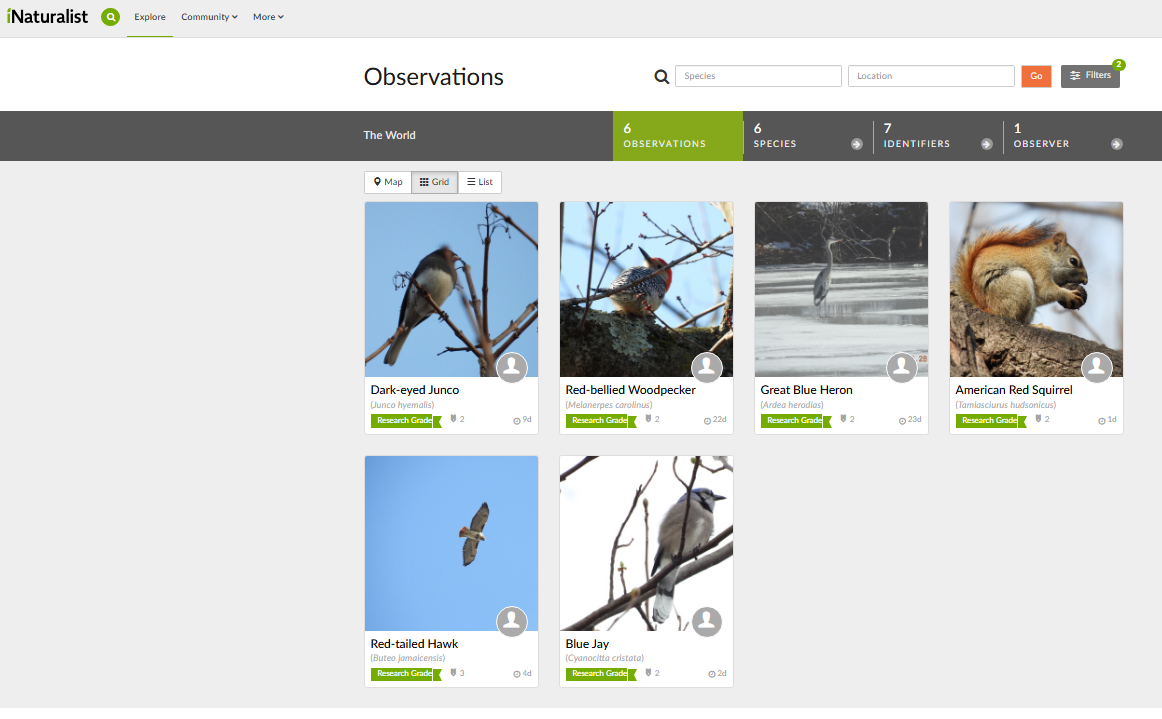
This weekend, I learned of another way that people can add DeSci activity to the Steem experience, through the iNaturalist web site/app. Unlike GlobeAtNight, this activity can be done at any time, so I wanted to post about it today.

image.png

The Birds at Conowingo Dam in March: Bald Eagles, Blue Herons, and Seagulls

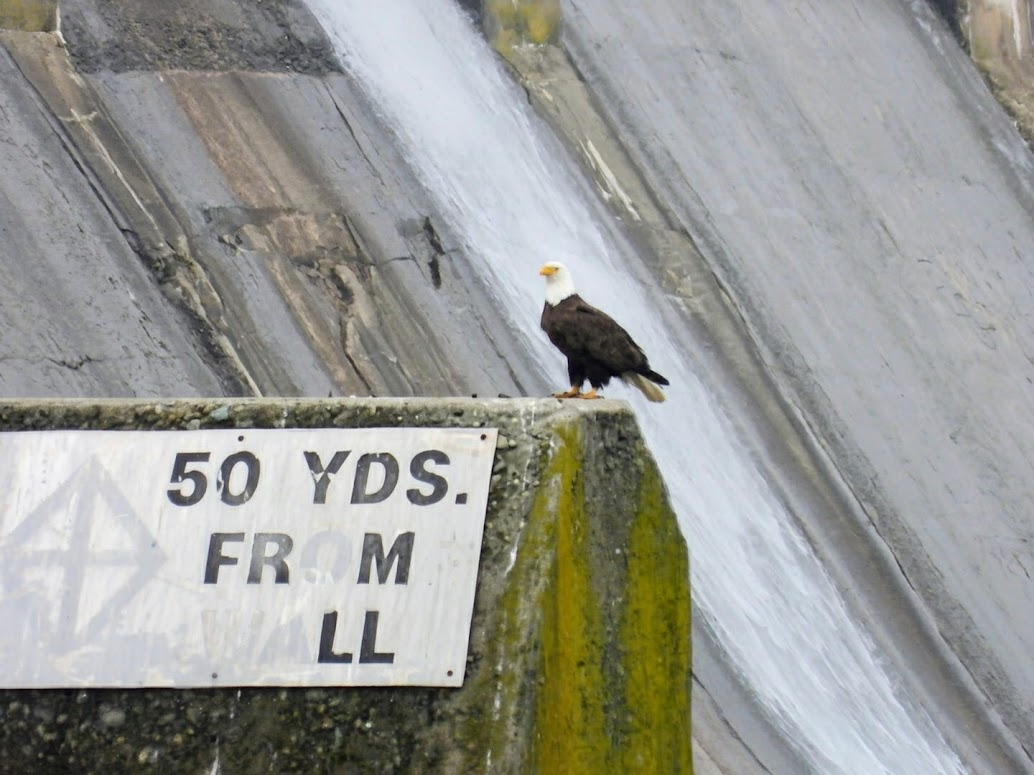
I believe this is my third post about birdwatching and photography visits to the Conowingo Dam. Here are the previous posts:

image.png

Making Wildlife Conservation Fun and Profitable

Is it Possible to Gamify Wildlife Conservation?

image.png
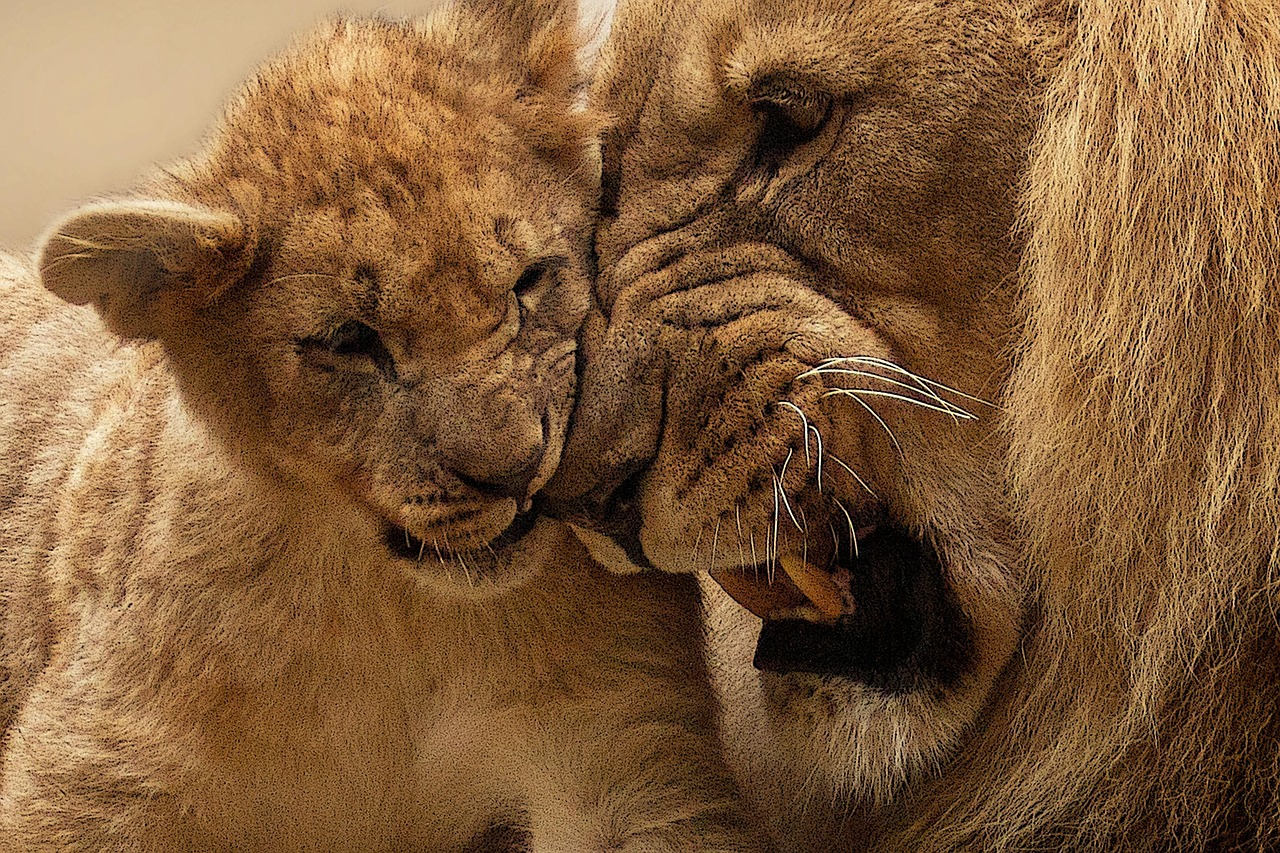
[Image Source: Pixabay.com, licensed under CC0, Public Domain]

Last July, the Internet blew up when a hunter killed a charismatic and seemingly popular lion in Zimbabwe named Cecil. I didn't participate much in the dust-up (and I don't particularly want to reopen it here), but I spent a lot of time in reflection. In this scenario, two of my beliefs came into conflict with each other. On one hand, I have no interest in hunting. Except when it's to put food on the table, I don't understand what motivates people to do it. Unless it comes down to a choice between a person and an animal, I think people should protect wildlife, not destroy it. On the other hand, though, I am almost always against using the government's guns to impose my own preferences on someone else, moreso when the events in question are half-way around the world.

So I began to wonder if there was a way to resolve this deadlock and bring these two beliefs into harmony, and I concluded that there needs to be a conservation method that sets up the right incentives and then works entirely through voluntary participation. It was around that time that I learned about the Property and Environment Research Center PERC, and was thrilled to find that there are people who call themselves free market environmentalists. This seemed to be on the right track.

Bald Eagles at the Conowingo Dam: A photo diary

In early October, I posted about our first birdwatching trip to the Conowingo Dam. As you may recall, the trip had actually happened in June, after I learned about this activity from the Conowingo Dam Eagles Facebook page. (If you want to see some amazing Bald Eagle photos, go visit that page! In my uninformed opinion, some of the participants there are probably world class photographers.)

In June, it was a spur of the moment trip, since we had driven in that general direction, anyway. The goal was simply to learn where to park and where to view the birds. Mission Accomplished. During that trip, we learned that the Bald Eagles are migratory birds, and they will be most prevalent at the dam between November and March. Later, I saw another report that the small peak window inside that large peak window is probably the last week of November and the first week of December.

So, it's not quite the end of November, but it's getting close. @lisa.palmer, @cmp2020, and I planned a second trip for Nov. 21. During the first trip, my 40X zoom camera had proved insufficient for the distances, so I purchased a low-budget upgrade, which is a second-hand Nikon Coolpix P1000 that is capable of zooming out to 125x.

If you go to the dam, you'll see people with photography equipment that's almost certainly worth 10s of thousands of dollars, but I can't justify that sort of expense. The P1000 cost about $900 (13,000 STEEM). I only expect to use the camera a few times per year, so I really couldn't justify a higher expense. Also, all I know about photography is "point" and "click", so I would have difficulty making use of the more advanced features, anyway.

image.png
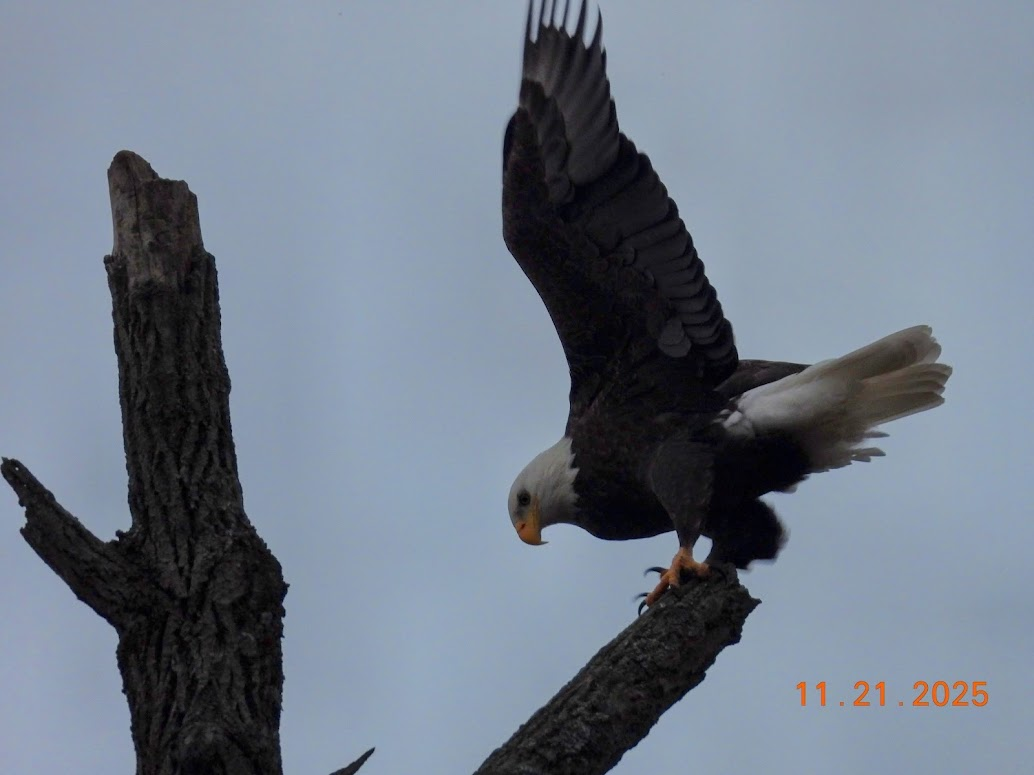
A Bald Eagle stretching its wings while perched at the top of a tree near our parking spot

My first birdwatching visit to the Conowingo Dam (and my first steem-atlas post)

Back in June, @lisa.palmer and I went to pick up @cmp2020 from the train station in Wilmington, Delaware, and on the way home we decided to take a bit of a detour.

I had recently learned about a Facebook group called the Conowingo Dam Eagles. Before then, I have driven past the Conowingo Dam any number of times, but it never occurred to me to stop there, and it really never occurred to me that it would be a good location for birdwatching. If you look at the photos in that Facebook group, however, you'll see that it actually seems to be an amazing spot for capturing photos of the American national bird, The Bald Eagle. I won't share any of their photos here due to copyright concerns, but click through and check them out. They are amazing.

I'd been watching their photos on Facebook for a few months, and I was curious what we'd see on a visit.

So, since we were driving south to Wilmington anyway, I thought it would be a good day for a short excursion to check out Maryland's Conowingo Dam. My goal for the day was really just to learn where to park, since I had never noticed any parking areas on the way by. I figured we'd plan a longer day trip in the future, once we learned our way around. With the help of the GPS, and after a couple of wrong turns, we found the parking lot for a picnic and fishing area next to the Susquehanna River, on the downstream side of the dam.

While we were there, we took some photographs, which I'll post here, and we also met a couple of people who go there, regularly, on photography excursions. From them, I learned a couple useful bits of information.

  1. The Bald Eagles generally come around between November and March. During the April-October part of the year, they migrate northwards.
  2. The reason it's so easy to find them on the downstream side of the dam is that fish get killed in the hydroelectric turbines, which makes mealtime for the birds a low-effort affair. (Later, I also learned that visitors may want to call for the generation schedule, since generator activity also signals higher activity for the birds. The number to call for the generation schedule is 1 (888) 457-4076, and apparently it plays a recorded loop containing the schedule.)

Because of #1, there were no Eagles present during our visit, but I'm planning to go back in November or December (maybe after purchasing a higher-zoom camera).

On the trip home, we randomly stopped for dinner at the Tidewater Grille in Havre De Grace, Maryland. I have already forgotten what we ate, but I'll say that we enjoyed the food and the atmosphere.

So, with that introduction out of the way, here are my photos. I am not much of a photographer, and my 40x zoom is clearly insufficient for the location, but hopefully they can give you an idea about what to expect.

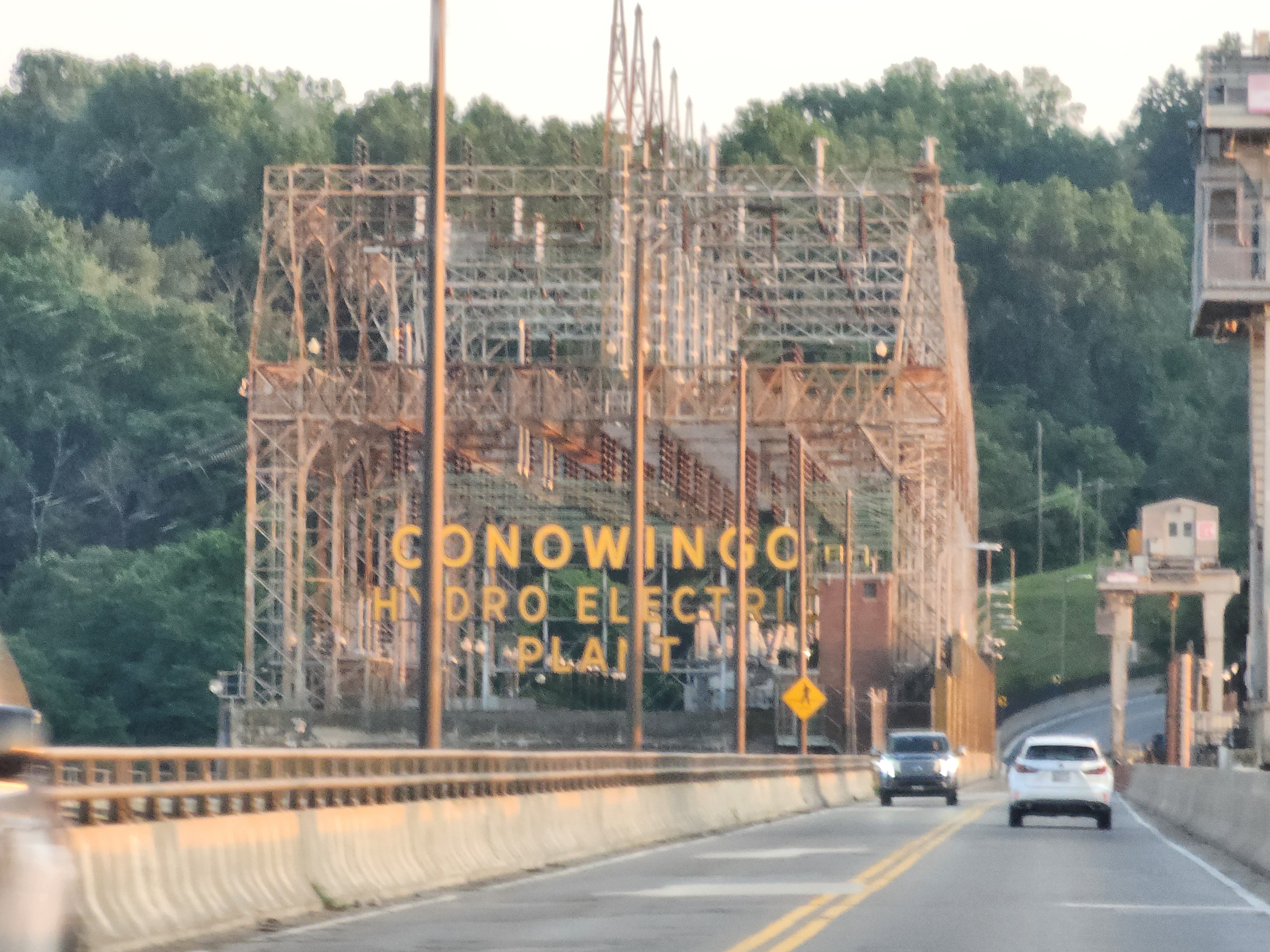
Here is the sign you see when driving across the dam (from the Pennsylvania/Delaware direction) on the way to the parking area

Alt text

Saturday, March 28, 2020

Curating the Internet: Science and technology digest for March 28, 2020

As San Francisco's residents shelter in place, coyotes are emerging on the streets; A Harvard Working Paper gives best practices for business to use in preparation for novel risks; A training simulator aims to make autonomous safer before encountering real-world roads; An article suggests using wastewater sampling to identify drug usage trends; and a Steem post offers two web sites with learn-at-home resources for students


Friday, March 27, 2020

Curating the Internet: Science and technology digest for March 27, 2020

A TED talk describing the "code for Venezuela" project and its emergent solutions; A new app helps researchers track coronavirus and learn about risks; Google eliminating the "User Agent" string from its Chrome browser; DIY face shield finds its way into hospitals and onto Ford's production floor; and a Steem embedded video discussing the nature of the US election system


Thursday, March 26, 2020

Curating the Internet: Science and technology digest for March 26, 2020

MIT researchers submit a $100 open source ventilator for FDA approval; Chinese company offers facial recognition for people wearing masks; A new AI system approaches 100% accuracy on cancer diagnoses; A Cold-War era submarine wreck is located off the coast of Oahu, Hawaii; and a Steem post argues that surveillance may be useful for COVID-19 in the short term, but it poses long term risks


Wednesday, March 25, 2020

Curating the Internet: Science and technology digest for March 25, 2020

Storj Labs launches decentralized cloud storage service, Tardigrade; Brave browser teams up with Binance to offer in-browser cryptocurrency trading; Recent evidence suggests that Schizophrenia may be an autoimmune condition; Lawyers advise to switch of smart-devices when working from home and discussing confidential information; and a Steem essay informs us that home tests for coronavirus can now be purchased online (when they're not sold out)


Tuesday, March 24, 2020

Curating the Internet: Science and technology digest for March 24, 2020

A TED talk gives the research history of the so-called "sex chromosomes"; Scientific theories behind the deja vu experience; A new attack tricks artificial intelligence systems into mischaracterizing images; Cancer research retracted after 14 years and more than 900 citations; and a Steem essay describes a doctor's efforts to prepare for coronavirus in Bangladesh


Monday, March 23, 2020

Curating the Internet: Science and technology digest for March 23, 2020

Jaron Lanier and Glen Weyl argue for data dignity, suggesting that human contributions to AI systems need to be accounted for; Microsoft Windows' Explorer and Start Menu may be getting a new look; Firefox continues its slow elimination of the unencrypted ftp protocol; Microsoft responds to allegations that the Edge browser is bad at privacy; and a Steem essay discussing Superworms that can survive by eating plastic


Sunday, March 22, 2020

Curating the Internet: Science and technology digest for March 22, 2020

IEEE Spectrum's weekly selection of awesome robot videos; A new technique is able to decipher ancient languages by comparing to modern languages along with existing translations; An archaeologist is saving a digital archive of historic sites in the Yukon and using it to create an online virtual exhibit; George R. R. Martin says he's spending coronavirus down-time writing about Westeros; and a Steem essay describes an algorithm to find a longest substring with no repeating characters


Saturday, March 21, 2020

Curating the Internet: Science and technology digest for March 21, 2020

Stanford soft robot operates without hydraulics or pneumatics; $1 million Turing award goes to Pixar pioneers in computer graphics; Developer acceptance increasing for Windows Subsystem for Linux; New map of the Milky Way galaxy reveals at least four spiral arms; and a Steem photo-essay tells us about the mineral, amethyst


Friday, March 20, 2020

Curating the Internet: Science and technology digest for March 20, 2020

Whitehouse promotes machine learning for coronavirus solutions; Security advice for the emerging work-from-home employers; Chloroquine and hydrochloroquine may offer low cost and effective treatment against COVID-19 and other viruses; How the coronavirus pandemic is permanently reshaping the business landscape; and a Steem essay acknowledges limited data, but argues that - at the moment - coronavirus infections are not growing at an exponential rate


Thursday, March 19, 2020

Curating the Internet: Science and technology digest for March 19, 2020

Ultrasonic attack can break into cell phones through a solid surface; Monkeys develop immunity to SARS-CoV-2 after first infection; Hiker finds two bombs from 1935 in a Hawaiian volcano; Commentary arguing that once a medical treatment comes into common practice, it persists long after it's found to be useless, or even harmful; and a Steem essay describing a dive to the USS Oriskany aka The Great Carrier Reef


Tuesday, March 17, 2020

Curating the Internet: Science and technology digest for March 18, 2020

A TED talk discusses human comfort levels with artificial intelligence systems; Commentary suggests that working from home was normal and expected for much of human history; An open access database contains metadata from 29,000 coronavirus studies and full text from 13,000; The TSA is now permitting larger bottles of hand sanitizer on flights, and Bruce Schneier argues that this is an implicit concession that the ban was never needed; and a Steem essay describing the Rhoeo Discolor, a plant that grows in South and Central America


Curating the Internet: Science and technology digest for March 17, 2020

Brave Browser files GPDR complaint against Google, claims Google violates "purpose limitation principle"; Study suggests that mothers have implicit bias about emotional expression between genders, fathers don't; Researchers suggest there is no underlying cause to mood disorders; Microsoft Teams buckled when telecommuting Europe showed up for work; and a Steem essay discussing essential aspects of remote learning


Monday, March 16, 2020

Curating the Internet: Science and technology digest for March 16, 2020

5G wireless is driving up the cost of smartphones; Doctors in Israel removed an entire lung from a patient, eliminated all cancerous cells, then reattached the lung; Whisper app for secret sharing revealed individuals' locations, ages, and other details; Advice for people who are working from home because of the coronavirus; and a Steem post describing a youtube video where chickens were hatched from store-bought eggs


Sunday, March 15, 2020

Curating the Internet: Science and technology digest for March 15, 2020

Previously unseen footage of a Thylacine or Tasmanian Tiger; IEEE Spectrum's weekly selection of awesome robot videos; Microsoft announces the end of the line for the Visual Basic programming language; Researchers adapt flu prediction methods to the novel coronavirus; and a Steem essay describing the race to blanket the Earth in satellite-based Internet coverage


Saturday, March 14, 2020

Curating the Internet: Science and technology digest for March 14, 2020


An electric motorcycle that's constructed from wood is on pre-sale for 2021 deliver; Coinbase announces BTC transaction batching in order to reduce fees and overhead; A cryptography pioneer discusses election security; Firefox add-on puts Facebook in its own container to limit snooping; and a Steem essay discusses the science behind snoring


Friday, March 13, 2020

Curating the Internet: Science and technology digest for March 13, 2020

Autonomous robots deployed to sterilize hospitals in China; Los Angeles Department of Water and Power accused of cybersecurity coverup; People with celiac disease may soon be able to eat gluten; IBM upgrading Watson to include advances from Project Debater; and a Steem photo-essay describes the engineering of a hundred year old Brownie camera


Thursday, March 12, 2020

Curating the Internet: Science and technology digest for March 12, 2020

Hunter gatherers wear fitbits and researchers say they're just as sedentary as modern societies.; A caution against harming the weakest students by moving classes online; Physicist suggests that dark matter may be comprised of a six-quark particle (hexaquark); Audit finds hospitals at risk of hacking do to obsolete systems; and a Steem essay describing the profession of an underwater archaeologist


Wednesday, March 11, 2020

Curating the Internet: Science and technology digest for March 11, 2020

A robot inspired by baby deer that can teach itself to walk; Brave Browser partners with TAP Network to connect BAT tokens directly to retailers; A fireside chat including the controversial and eccentric Craig Wright and economist George Gilder; Master's thesis finds that rocks from Earth and Moon are less similar than previously believed; and a Steem essay discussing the theoretical possibility of "bubbles of nothing" that could destroy the universe


Tuesday, March 10, 2020

Curating the Internet: Science and technology digest for March 10, 2020

Automatic pricing algorithms could reduce competition and raise consumer prices; Robot swarm achieves goals without central orchestration; Lettuce grows on the International Space Station (ISS); Google releases open source TensorFlow Quantum to streamline quantum machine learning; and a @steemhunt post that draws attention to a children's exotrainer for repairing muscular atrophy


Monday, March 9, 2020

Curating the Internet: Science and technology digest for March 9, 2020

Study finds that low-carb diets may prevent and reverse age-related cognitive decline; IEEE Spectrum's weekly selection of awesome robot videos from March 6.; a Steem essay describing the current state of knowledge on the novel coronavirus (COVID-19); A podcast argues that bitcoin mining might be returning to the US, and that it might represent a new business model for power plants; and a TED talk describing research into how specific neural pathways in the brain impact behavior


Sunday, March 8, 2020

Curating the Internet: Science and technology digest for March 7, 2020

Harvard Working Paper suggests that occupational licensing reduces competition and fails to improve consumer satisfaction; More on the health-care robot that automates needle insertion for blood draws and fluid delivery; Glassware in Japan dates to Persian dynasty between years 226 and 551; Study in Finland finds that pet dogs are surprisingly anxious and stressed; and a Steem photo-essay with original nature-photography from Bangladesh


Friday, March 6, 2020

Curating the Internet: Science and technology digest for March 6, 2020

A TED talk by a security researcher gives a rundown on "stalkerware"; A Youtube video addresses Peto's Paradox - the surprising observation that larger animals are less likely to get cancer; Microsoft announces a free tier of its Cosmos DB NoSQL database; Twitter is testing fleets, transient tweets that expire after 24 hours; Brave Browser announces a state of the art privacy enhancement; and a Steem essay discusses the nature, causes, and treatments for post-traumatic stress disorder


Thursday, March 5, 2020

Curating the Internet: Science and technology digest for March 5, 2020

Partnership between Boston Dynamics and Otto Motors makes warehouse automation safer; A paper claiming a link between the Sun and global warming was retracted. The authors dispute the action.; Computers suggest that between 1700 and 1910, Beethoven was the most influential piano composer and Rachmaninoff was the most innovative; A new AI chip makes image recognition much faster; and a Steem author reviews the Brave Browser


Wednesday, March 4, 2020

Curating the Internet: Science and technology digest for March 4, 2020

Honeywell claims quantum breakthrough that's twice as powerful as IBM and Google offerings; A satirical browser extension responds to the coronavirus by adding medical masks to images that contain faces; British historians find a secret door in Parliament's House of Commons; Twitter gives blue check mark to fake politician invented by high school student; and a Steem essay discusses incision and drainage as a treatment for subcutaneous abscess


Tuesday, March 3, 2020

Curating the Internet: Science and technology digest for March 3, 2020

Dogs' noses can sense the ambient warmth of their prey from a meter and a half away; "Fake news" didn't have much impact on the 2016 election; An attempt at estimating numbers of unreported cases of the novel coronavirus (COVID-19); Xerox offers $24 per share to buy HP. HP says no thank you.; and a Steem "citizen science" photo-essay with bird photography and siting counts


Monday, March 2, 2020

Curating the Internet: Science and technology digest for March 2, 2020

American consumers get gun-shy after data breaches; The Brave browser adds feature to do Wayback Machine look-ups for missing web pages; Ex-Googler, Eric Schmidt, argues for massive investment in emerging technologies and intellectual capital; Another safety and feasibility trial finds that CRISPR gene editing is safe for cancer therapies; and a Steem post with photos of the ATLAS comet (Comet C/2019 Y4)


Sunday, March 1, 2020

Curating the Internet: Science and technology digest for March 1, 2020

IEEE Spectrum's weekly selection of awesome robot videos; A report on browser privacy finds that Brave leads the pack, Microsoft Edge and Yandex trail; Theorists still don't totally understand how planes fly; A new study sees brain waves as a form of "what if" testing; and a Steem essay with embedded video describing a first-hand observation of baboons in the wild


Saturday, February 29, 2020

Curating the Internet: Science and technology digest for February 29, 2020

Artificial intelligence predicts heart attacks, strokes, and even deaths better than doctors with traditional techniques; Unisys CEO predicts a year of transition, and also a possible return of acquisition activities; Freeman Dyson was almost certainly my favorite science & technology writer. He died on Friday (Feb 28); Texas wind-power is driving a Bitcoin mining expansion in the state; and a Steem essay describing new research into leptoquarks at the Large Hadron Collider


Friday, February 28, 2020

Curating the Internet: Science and technology digest for February 28, 2020

Smithsonian Institute puts 2.8 images into the public domain; Coinbase Child pays for parent (CPFP) technique supports zero-fee BTC transactions in its custody product; The US Department of Defense has adopted principles for ethical adoption of artificial intelligence; A summary of a recent Association for Computing Machinery (ACM) conference on ethical artificial intelligence; and a Steem post that describes a biodegradable coffee cup that can be used to plant trees