Steem Promoted Posts - Proof of Concept

🚀 Promoted on Steem loading…
Fetching promoted posts…
Showing posts with label wildlife. Show all posts

Monday, June 15, 2026

[Citizen Science] Another way that Steem photographers and bloggers can help to advance science and protect wildlife

Background

I recently posted the articles, [Citizen Science] The Night Sky in South-Eastern Pennsylvania and Steem for Citizen Science: Globe At Night's March Campaign, where I demonstrated the ability for people on the Steem blockchain to contribute to decentralized science initiativees (aka "Citizen Science" or "DeSci"). Specifically, the GlobeAtNight web site runs a monthly campaign where people can submit observations of the night sky in order to measure global light pollution. (Reminder: The next campaign runs from April 9 through April 18.)

It's a piece of cake for people to submit an observation to the campagin and then write a blog post about it here on the Steem blockchain.

This weekend, I learned of another way that people can add DeSci activity to the Steem experience, through the iNaturalist web site/app. Unlike GlobeAtNight, this activity can be done at any time, so I wanted to post about it today.
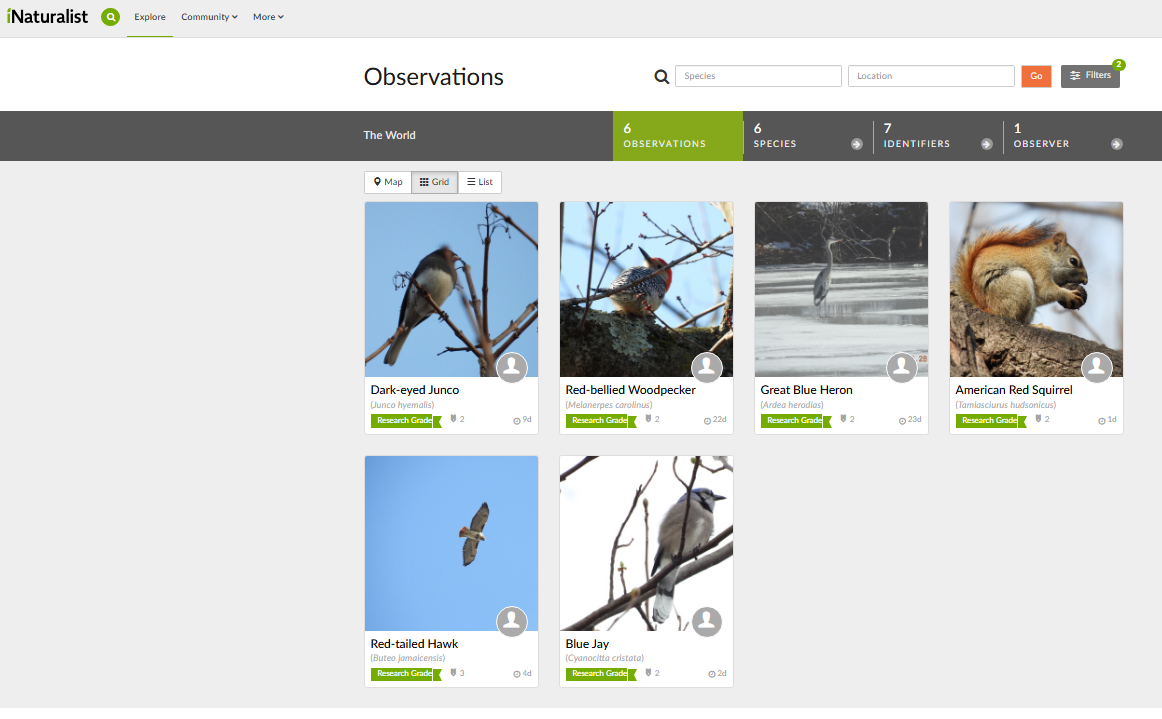
image.png

Over the weekend, I contributed six wildlife observations to the site. The suggested identifications that I proposed were verified by other iNaturalist participants, and the observations were subsequently categorized as "Research Grade", which apparently means that the observation will be shared with certain scientific databases for use by researchers.

The species observed were as follows:

  1. American Red Squirrel (observation)
  2. Blue Jay (observation)
  3. Dark-eyed Junco (observation)
  4. Great Blue Heron (observation)
  5. Red-bellied Woodpecker (observation)
  6. Red-tailed Hawk (observation)

Here's the story.

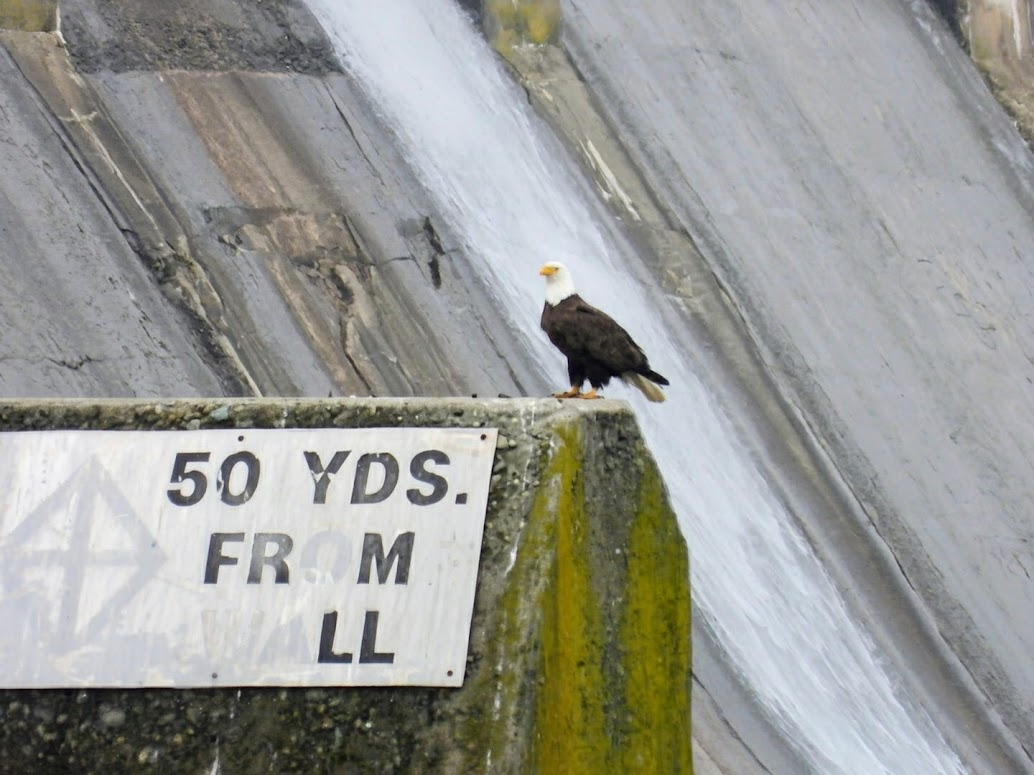
The Birds at Conowingo Dam in March: Bald Eagles, Blue Herons, and Seagulls

I believe this is my third post about birdwatching and photography visits to the Conowingo Dam. Here are the previous posts:

image.png

Making Wildlife Conservation Fun and Profitable

Is it Possible to Gamify Wildlife Conservation?

image.png
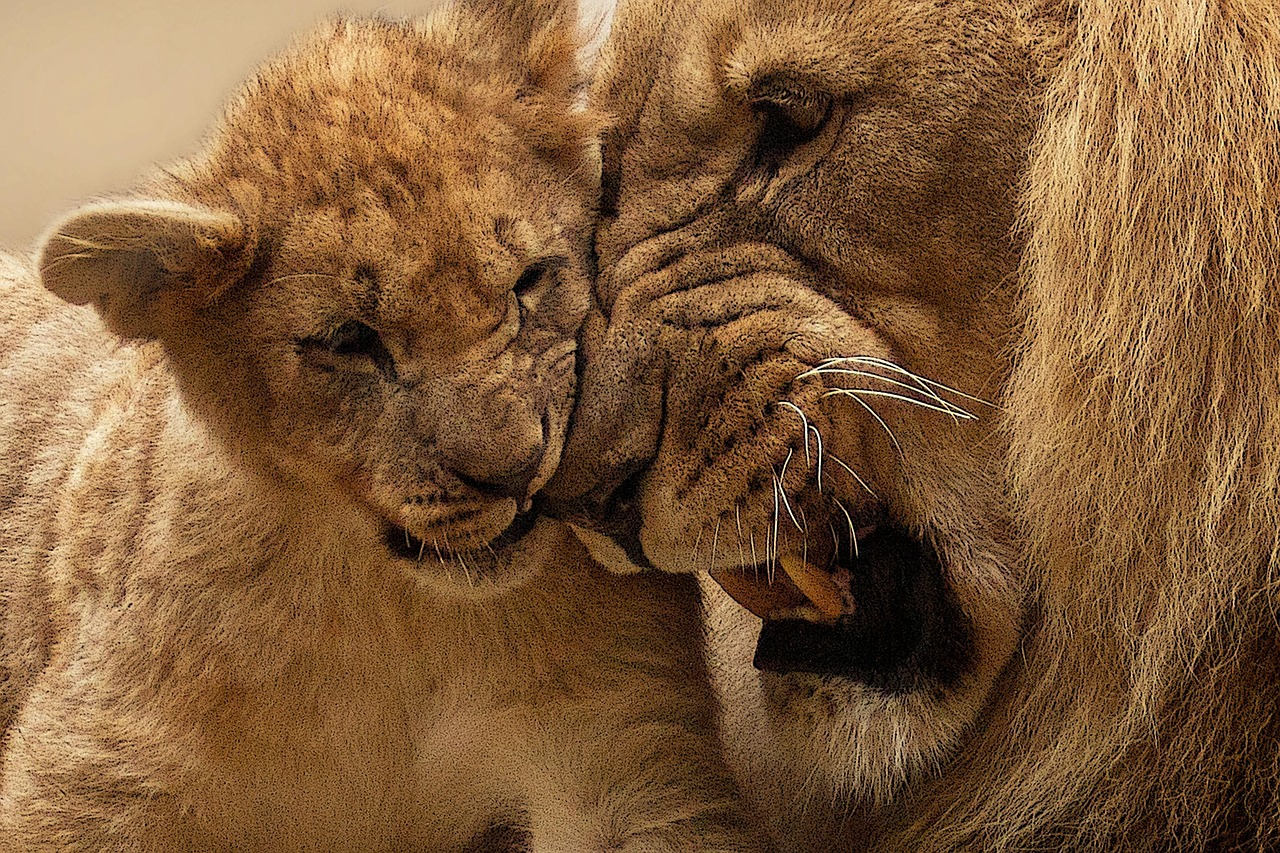
[Image Source: Pixabay.com, licensed under CC0, Public Domain]

Last July, the Internet blew up when a hunter killed a charismatic and seemingly popular lion in Zimbabwe named Cecil. I didn't participate much in the dust-up (and I don't particularly want to reopen it here), but I spent a lot of time in reflection. In this scenario, two of my beliefs came into conflict with each other. On one hand, I have no interest in hunting. Except when it's to put food on the table, I don't understand what motivates people to do it. Unless it comes down to a choice between a person and an animal, I think people should protect wildlife, not destroy it. On the other hand, though, I am almost always against using the government's guns to impose my own preferences on someone else, moreso when the events in question are half-way around the world.

So I began to wonder if there was a way to resolve this deadlock and bring these two beliefs into harmony, and I concluded that there needs to be a conservation method that sets up the right incentives and then works entirely through voluntary participation. It was around that time that I learned about the Property and Environment Research Center PERC, and was thrilled to find that there are people who call themselves free market environmentalists. This seemed to be on the right track.

Bald Eagles at the Conowingo Dam: A photo diary

In early October, I posted about our first birdwatching trip to the Conowingo Dam. As you may recall, the trip had actually happened in June, after I learned about this activity from the Conowingo Dam Eagles Facebook page. (If you want to see some amazing Bald Eagle photos, go visit that page! In my uninformed opinion, some of the participants there are probably world class photographers.)

In June, it was a spur of the moment trip, since we had driven in that general direction, anyway. The goal was simply to learn where to park and where to view the birds. Mission Accomplished. During that trip, we learned that the Bald Eagles are migratory birds, and they will be most prevalent at the dam between November and March. Later, I saw another report that the small peak window inside that large peak window is probably the last week of November and the first week of December.

So, it's not quite the end of November, but it's getting close. @lisa.palmer, @cmp2020, and I planned a second trip for Nov. 21. During the first trip, my 40X zoom camera had proved insufficient for the distances, so I purchased a low-budget upgrade, which is a second-hand Nikon Coolpix P1000 that is capable of zooming out to 125x.

If you go to the dam, you'll see people with photography equipment that's almost certainly worth 10s of thousands of dollars, but I can't justify that sort of expense. The P1000 cost about $900 (13,000 STEEM). I only expect to use the camera a few times per year, so I really couldn't justify a higher expense. Also, all I know about photography is "point" and "click", so I would have difficulty making use of the more advanced features, anyway.

image.png
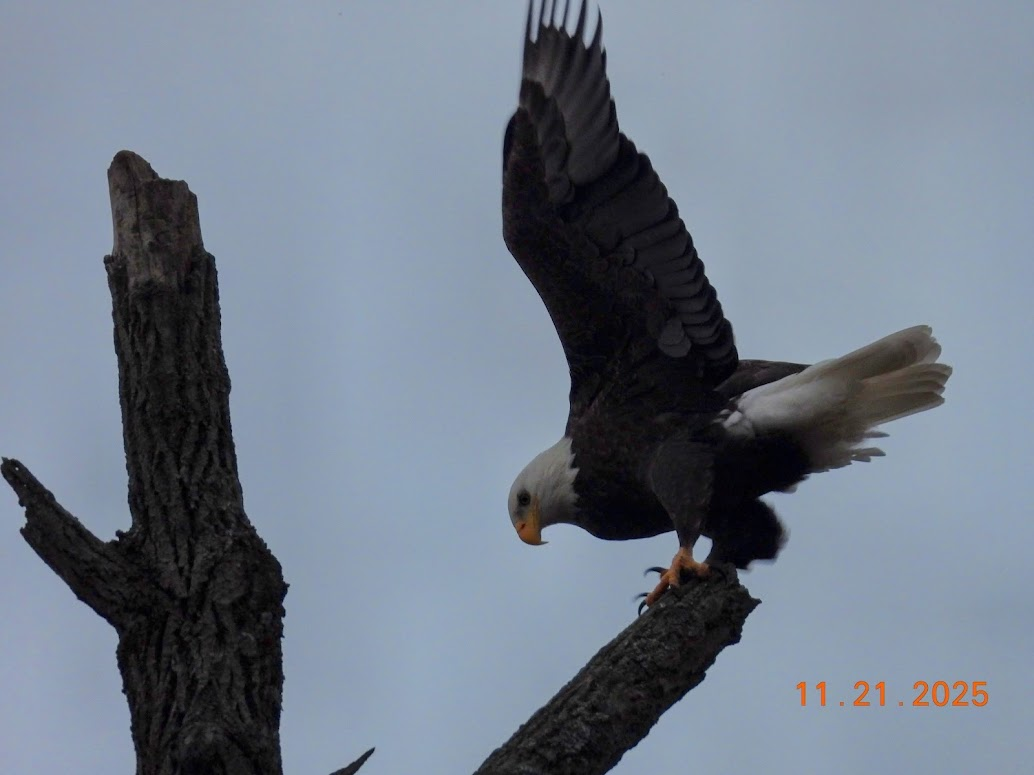
A Bald Eagle stretching its wings while perched at the top of a tree near our parking spot

My first birdwatching visit to the Conowingo Dam (and my first steem-atlas post)

Back in June, @lisa.palmer and I went to pick up @cmp2020 from the train station in Wilmington, Delaware, and on the way home we decided to take a bit of a detour.

I had recently learned about a Facebook group called the Conowingo Dam Eagles. Before then, I have driven past the Conowingo Dam any number of times, but it never occurred to me to stop there, and it really never occurred to me that it would be a good location for birdwatching. If you look at the photos in that Facebook group, however, you'll see that it actually seems to be an amazing spot for capturing photos of the American national bird, The Bald Eagle. I won't share any of their photos here due to copyright concerns, but click through and check them out. They are amazing.

I'd been watching their photos on Facebook for a few months, and I was curious what we'd see on a visit.

So, since we were driving south to Wilmington anyway, I thought it would be a good day for a short excursion to check out Maryland's Conowingo Dam. My goal for the day was really just to learn where to park, since I had never noticed any parking areas on the way by. I figured we'd plan a longer day trip in the future, once we learned our way around. With the help of the GPS, and after a couple of wrong turns, we found the parking lot for a picnic and fishing area next to the Susquehanna River, on the downstream side of the dam.

While we were there, we took some photographs, which I'll post here, and we also met a couple of people who go there, regularly, on photography excursions. From them, I learned a couple useful bits of information.

  1. The Bald Eagles generally come around between November and March. During the April-October part of the year, they migrate northwards.
  2. The reason it's so easy to find them on the downstream side of the dam is that fish get killed in the hydroelectric turbines, which makes mealtime for the birds a low-effort affair. (Later, I also learned that visitors may want to call for the generation schedule, since generator activity also signals higher activity for the birds. The number to call for the generation schedule is 1 (888) 457-4076, and apparently it plays a recorded loop containing the schedule.)

Because of #1, there were no Eagles present during our visit, but I'm planning to go back in November or December (maybe after purchasing a higher-zoom camera).

On the trip home, we randomly stopped for dinner at the Tidewater Grille in Havre De Grace, Maryland. I have already forgotten what we ate, but I'll say that we enjoyed the food and the atmosphere.

So, with that introduction out of the way, here are my photos. I am not much of a photographer, and my 40x zoom is clearly insufficient for the location, but hopefully they can give you an idea about what to expect.

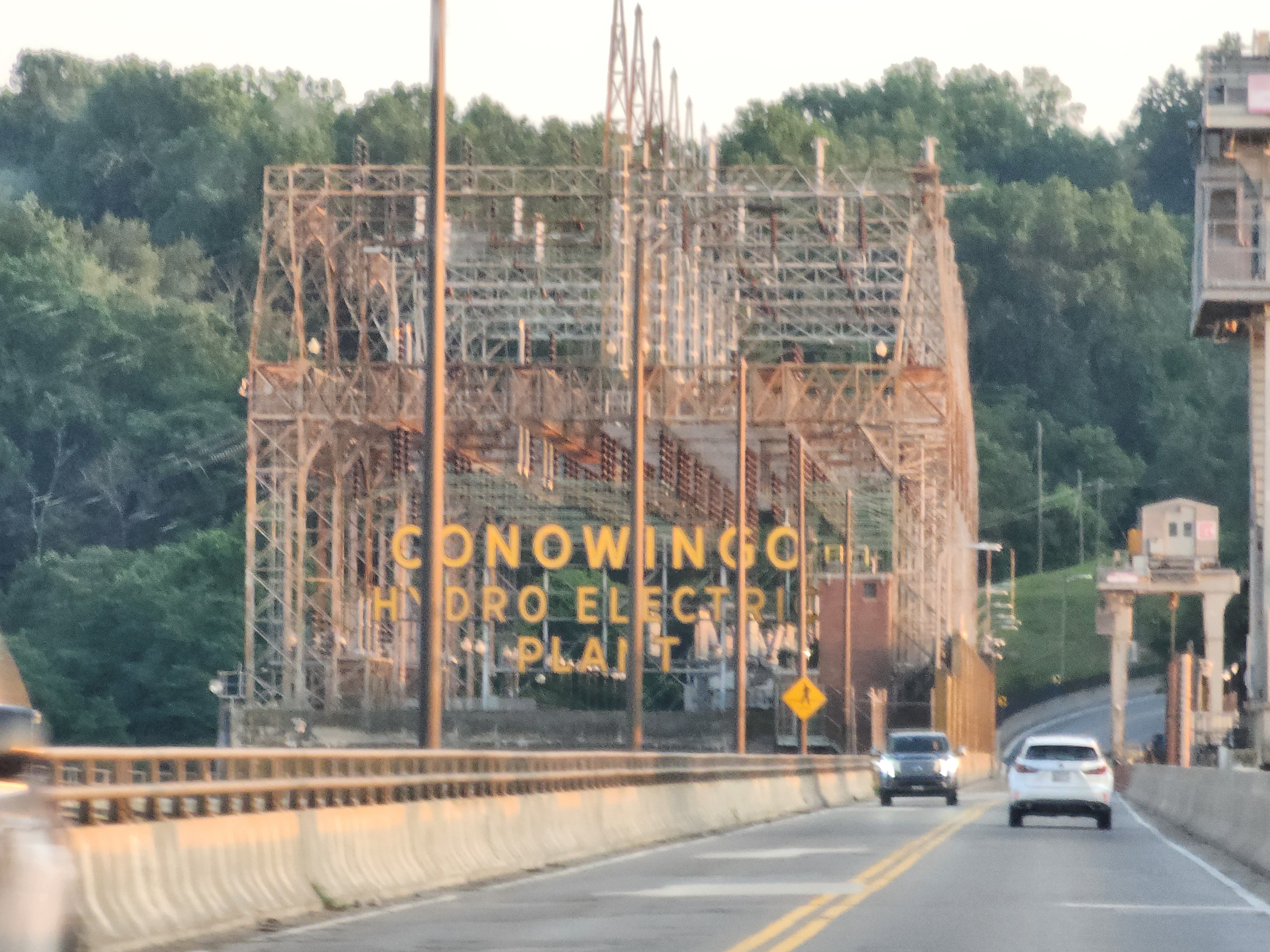
Here is the sign you see when driving across the dam (from the Pennsylvania/Delaware direction) on the way to the parking area

Alt text